
Drawing Koalas, Now That They Are Endangered
Ink drawings of koalas made by hand in Dayboro. What changed after the 2022 endangered listing, the one that sold, and what is still on the wall.

Out the door at half five. Paris in August belongs to whoever gets up first.
The list for today had four things on it. Trocadero before the crowds, the Petit Palais, La Madeleine, and the oldest covered market in the city. I got all four, which almost never happens.
Trocadero at six is an empty stone stage with the most photographed object on earth at the end of it. It had rained in the night. Everyone else was pointing a camera up. I got down on the wet paving and pointed mine at the ground.
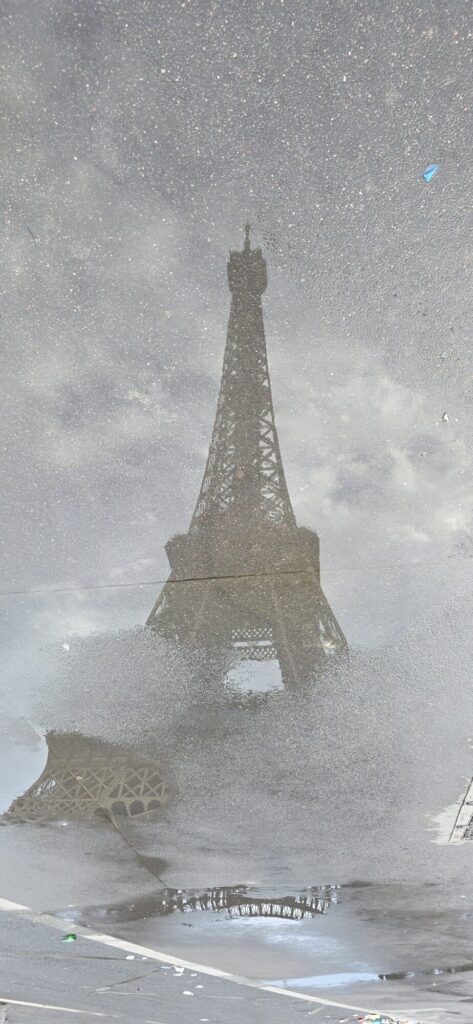
The whole tower, upside down, in two centimetres of dirty rainwater. All that iron, and the puddle eats every hard edge. Look what the grit does to the outline. That is the line I chase with a brush and cannot get on purpose. Water does it for free, then dries, and does not care.
Walked down under the tower and along the river, and the light went flat and grey. Suits me. I shoot in colour and think in black and white anyway.
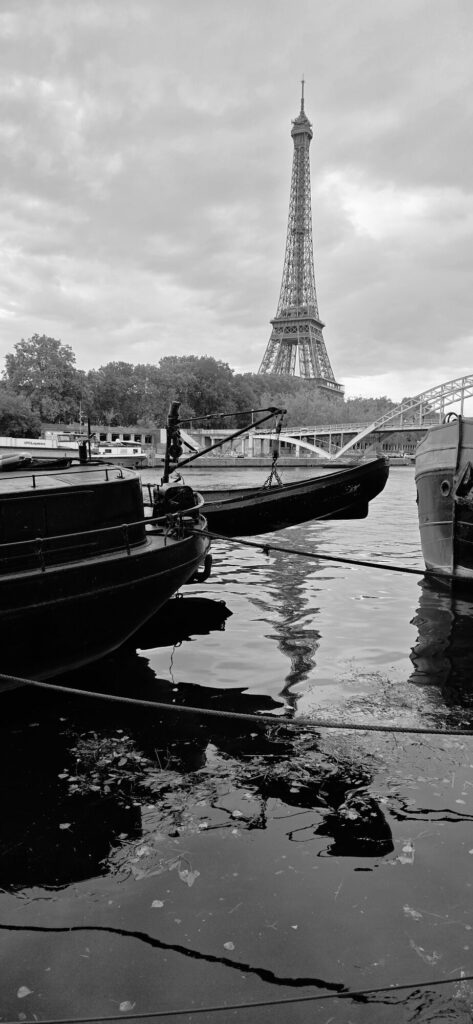
Big black hulls, one rope pulled tight across the frame, and the famous thing shoved to the back where it does least damage. The rope is the drawing.
Then the Petit Palais, which is free, and which I would have paid for.
Before you reach a single painting you get that. A curved gallery wrapped around a garden, mosaic floor turning in slow circles, a ceiling painted with trees and swimming figures. That floor is animation. Somebody worked out the timing of a curve, in stone.
In the sculpture gallery, this one stopped me flat.
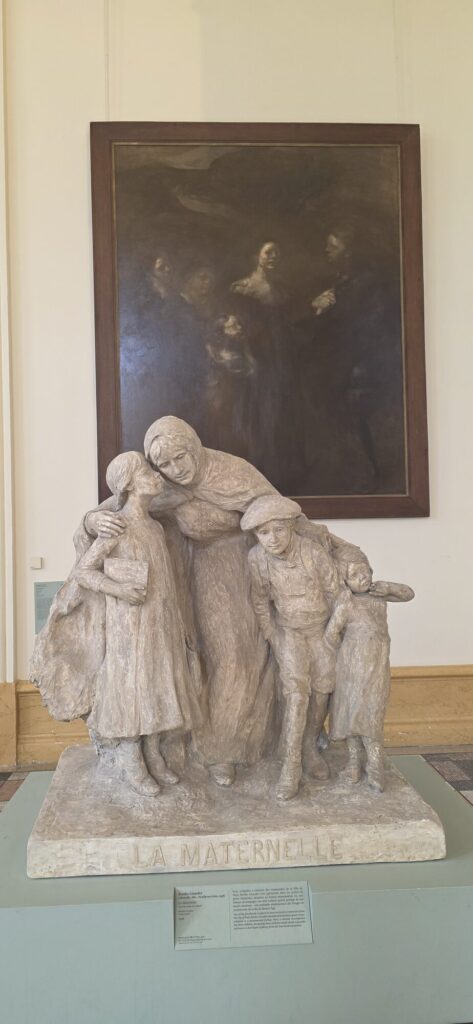
Berthe Girardet, 1908. A woman with four children hanging off her and every one of them leaning a different way, and she is holding the lot together with one arm and a shawl. Girardet was one of very few women sculptors the City of Paris ever commissioned. The museum has hung her in front of Eugene Carriere’s misty brown canvases from 1900, four of them, painted for the wedding hall of the eleventh arrondissement town hall. The label says they were never put up. One flat line, like it is not the saddest sentence in the room.
Then upstairs the Petit Palais did something I did not see coming.
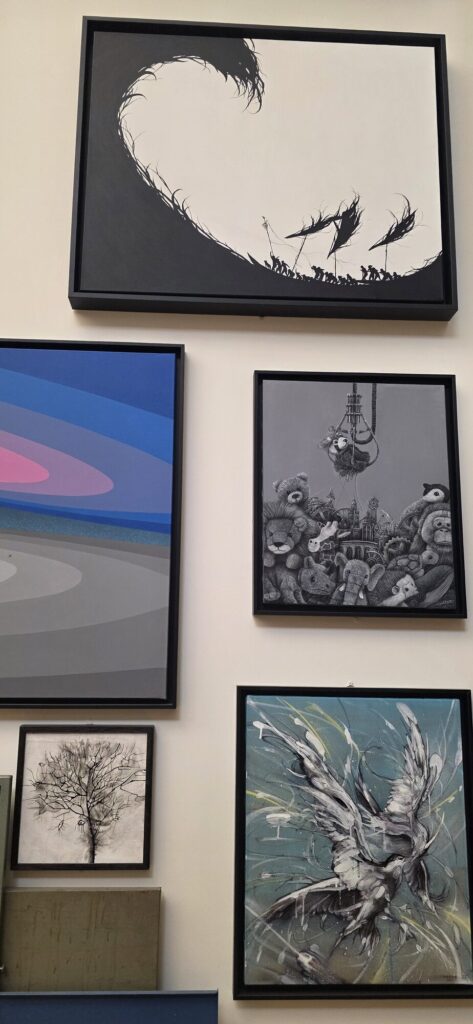
We are (still) here. Sixty-odd street artists, nearly two hundred works, hung floor to ceiling salon style right in among the marble, and free until the twentieth of September. Invader is in it, Shepard Fairey is in it, and a dozen people I had never heard of who are now in my notebook. The one I stood in front of is that big brush painting up top. One curling black wave, wet edges left alone, a line of figures underneath dragging their flags into it. It works from across the room and from a foot away, and that is the whole test.
And then, downstairs.
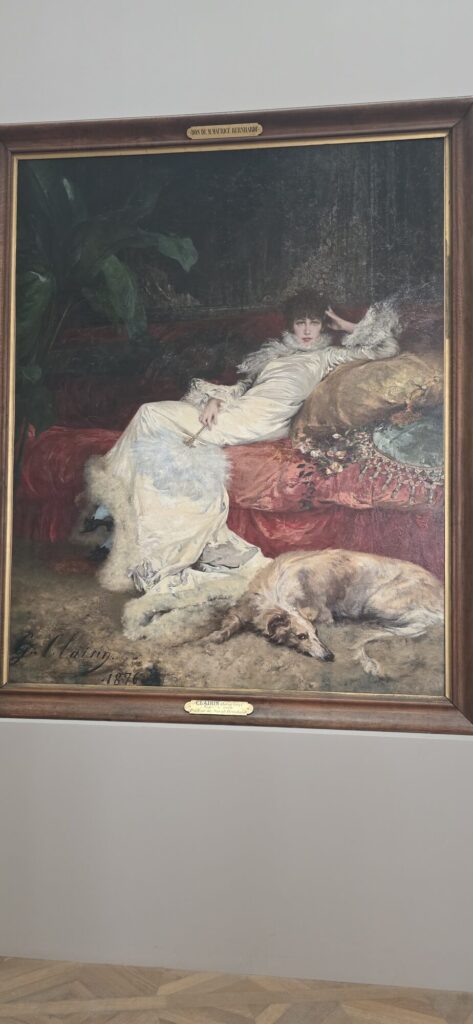
Georges Clairin painted Sarah Bernhardt in 1876 and the whole press noticed. He was her lover, then her friend, and he painted her for fifty years. Her son gave the picture to this museum after she died. Everybody looks at the satin. I looked at the dog. That wolfhound is the only honest thing on the canvas, chin flat on the floor, and Clairin drew him better than he drew her.
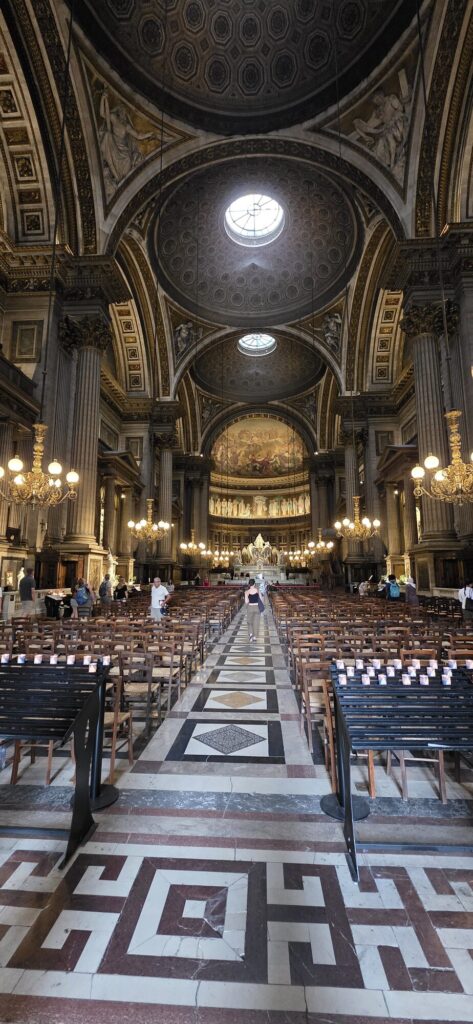
La Madeleine after that. From the street it is a Greek temple that took a wrong turn into the wrong century. Inside it is dark and gold, with three round openings in the roof dropping daylight straight down the middle. Then rows and rows of chairs, all slightly out of line, and the floor pattern running underneath at a different angle. Somebody could spend a week on that floor.
Then the Marche des Enfants Rouges, feeding this corner of the Marais since 1615 and named after the children of an orphanage nearby who were dressed in red. Nothing from in there I am willing to show you, it was shoulder to shoulder and every second frame is somebody’s face. Four hundred years of people buying dinner in the same shed.
Last one, on the walk home.
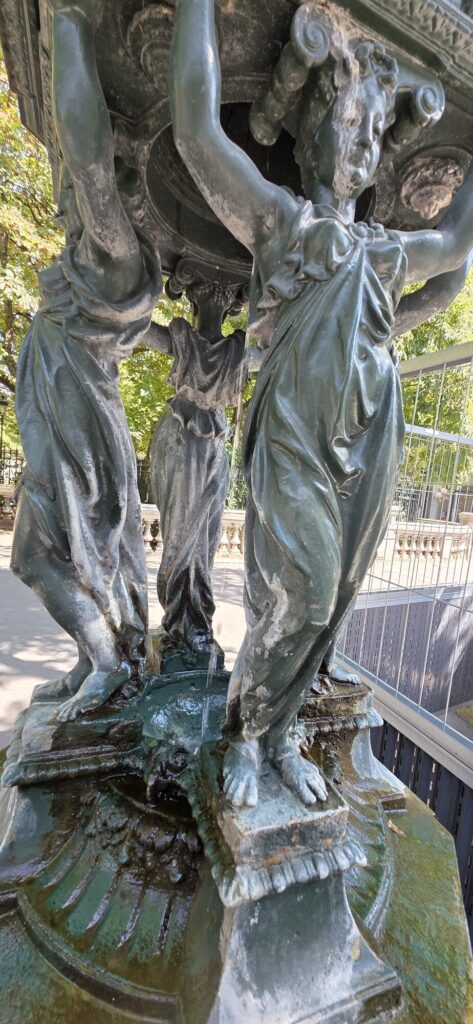
A Wallace fountain, still running. After the siege the city had no clean water it could afford, so a rich Englishman called Richard Wallace sketched a drinking fountain, paid for the lot, and had Charles-Auguste Lebourg sculpt it. The first went up on the thirtieth of July 1872. Four women hold the roof, and they are meant to be kindness, simplicity, charity and sobriety. What gets me is the drapery. Cast iron, out in the weather for a hundred and fifty years, and the folds still move.
Free art, free water, free market. A very long way on foot, and I paid for none of it.
Ink drawings of koalas made by hand in Dayboro. What changed after the 2022 endangered listing, the one that sold, and what is still on the wall.

They come through the gums before a storm and the whole paddock hears them first. Four birds, one flash of red, and the hardest thing I have ever tried to put down in ink.
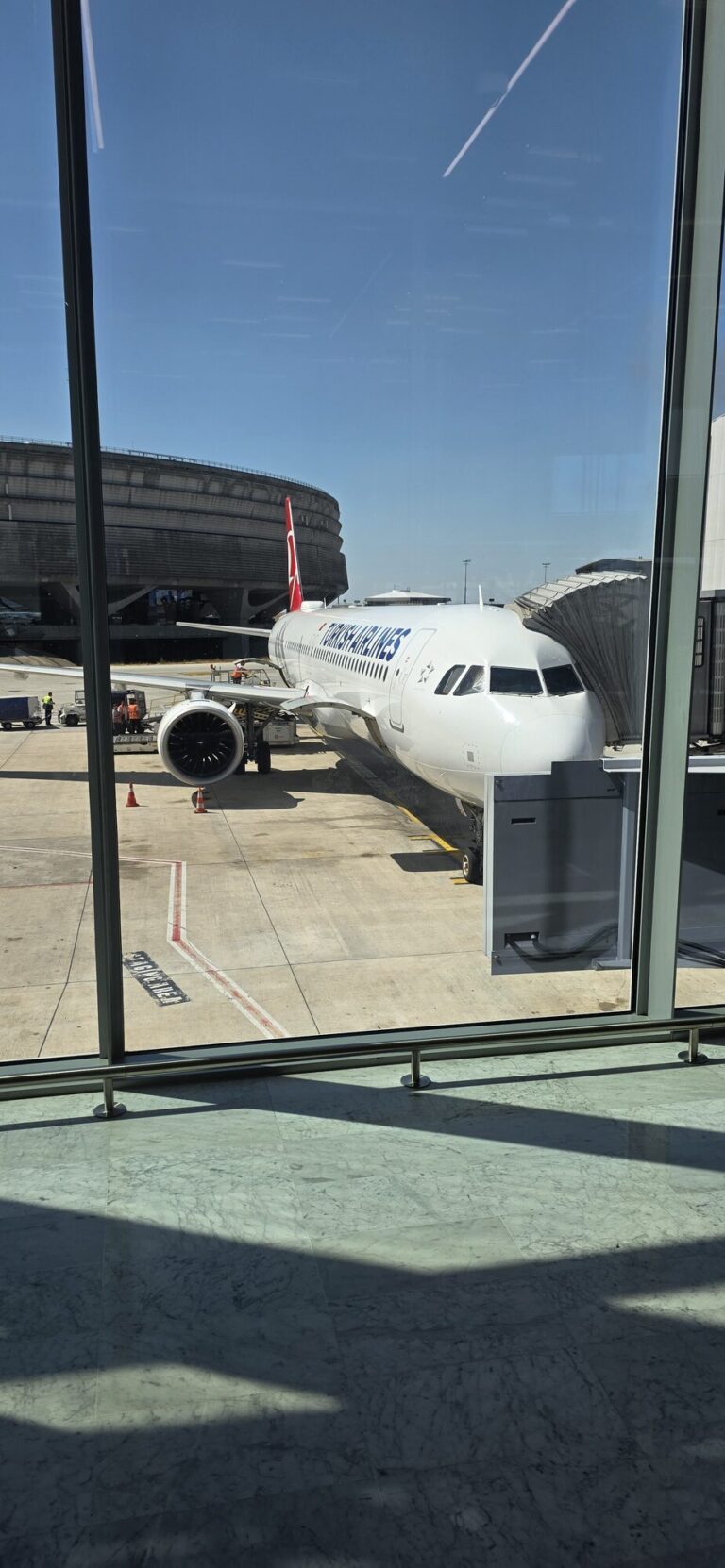
Six weeks, four countries, one full camera. The gate at Charles de Gaulle, a plane pointed at Istanbul, and the long hop home to the studio. Last post from the road.