
Drawing Koalas, Now That They Are Endangered
Ink drawings of koalas made by hand in Dayboro. What changed after the 2022 endangered listing, the one that sold, and what is still on the wall.

I told you about the gardens and the forger. I did not tell you what was going on indoors, and indoors is where somebody won an argument that has been running since the fifteenth century.
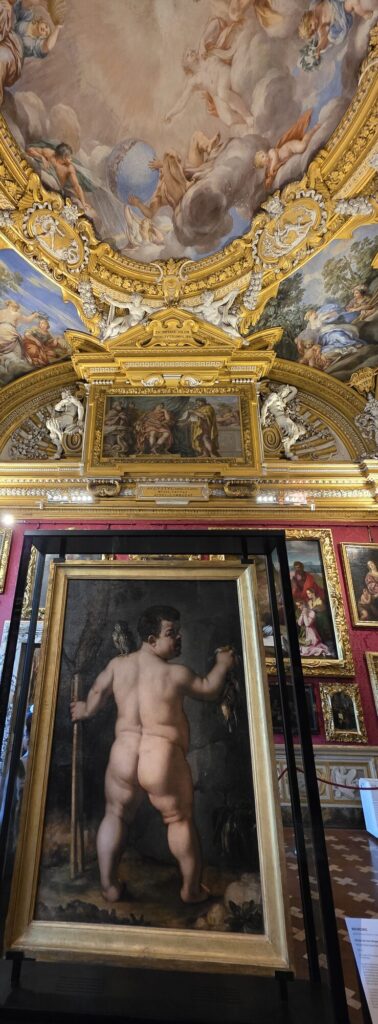
That is a Bronzino, 1552, and what you are looking at is the reverse. It is standing on legs in the middle of the floor because you are meant to walk round it. Both sides are painted. Same man, front and back, on one canvas.
His name was Braccio di Bartolo, known as Morgante, and he was the best known of the five buffoons at the court of Cosimo de’ Medici. Bronzino painted him as a bird-catcher, which is what he was allowed to hunt. On the front he is holding an owl as a lure, waiting for a jay. On this side the job is done. When they last cleaned it they found two swallowtail butterflies that had been painted over, sitting exactly where you would expect somebody to add butterflies.
But the reason it is on legs is an argument. Painters and sculptors spent a couple of centuries going at each other over whose art was superior, and the sculptors had one very good line: you can walk round mine. So Bronzino painted both sides, put it in the middle of the room, and said fine, walk round this then.
Four hundred and seventy odd years later it is still standing there making the point. I have never seen a piece of professional spite age so well.
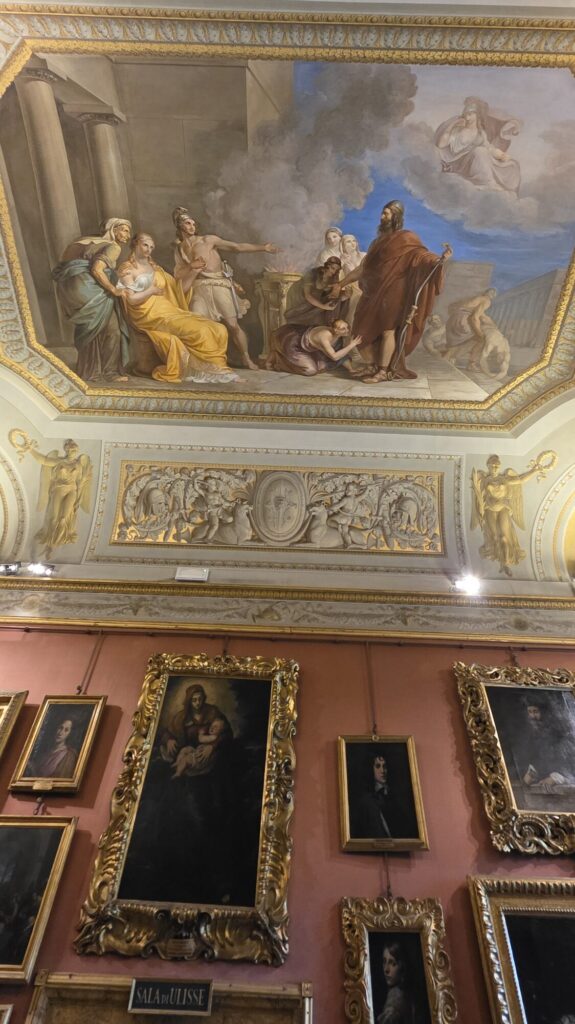
And this is how the whole place is hung. Not a nice line of pictures at eye level with a respectful gap. They have gone right up the wall, big ones, little ones, portraits wedged in wherever a portrait would fit, all the way to the cornice.
Modern galleries would call it a mess. It is not a mess, it is a different job. Nobody is asking you to stand in front of one painting and have a moment. They are showing you that the family owned all of this, and the effect is meant to hit you before you focus on anything.
Look up and it keeps going. Frescoed sky, plaster figures leaning out of the corners, gold on every edge. There is no restful surface in the entire room. I stood in the middle of it feeling my eyes get tired and thought, right, this is what maximalism looked like before anybody needed a word for it.
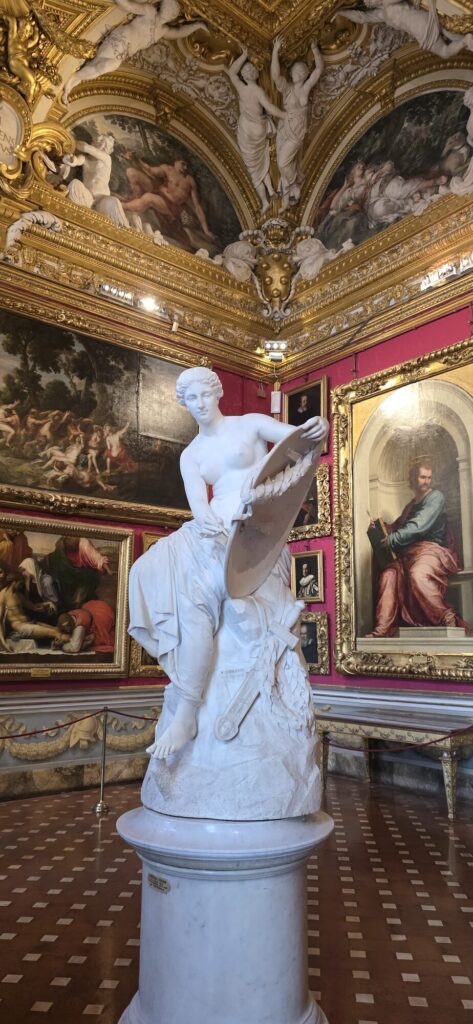
Then in the next room, one white marble figure on a plinth in the centre of the floor, and the whole thing calms down. That is not an accident of hanging. Everything on those walls is dark and warm and busy, and the one cool pale thing in the room takes all the pressure off.
Same trick I use with a sheet of white paper. You do not make the drawing louder. You leave somewhere for the eye to rest and the loud parts get louder on their own.
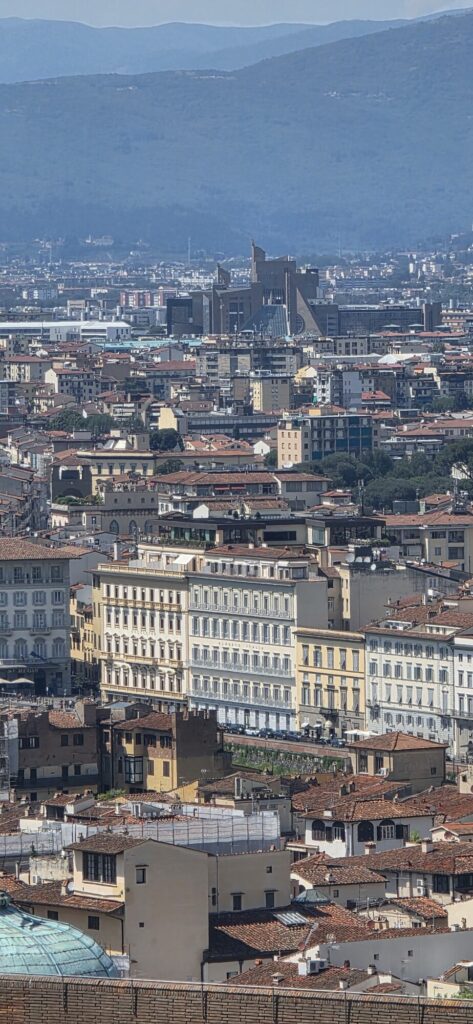
Then out and up for air, and the city doing what it does. Terracotta all the way to the hills, the big tower and the dome sticking up out of it, and every single roof a slightly different shade of the same orange.
Two hours of gold leaf and I walked out and got flattened by a field of tiles. Serves me right.
Ink drawings of koalas made by hand in Dayboro. What changed after the 2022 endangered listing, the one that sold, and what is still on the wall.

They come through the gums before a storm and the whole paddock hears them first. Four birds, one flash of red, and the hardest thing I have ever tried to put down in ink.
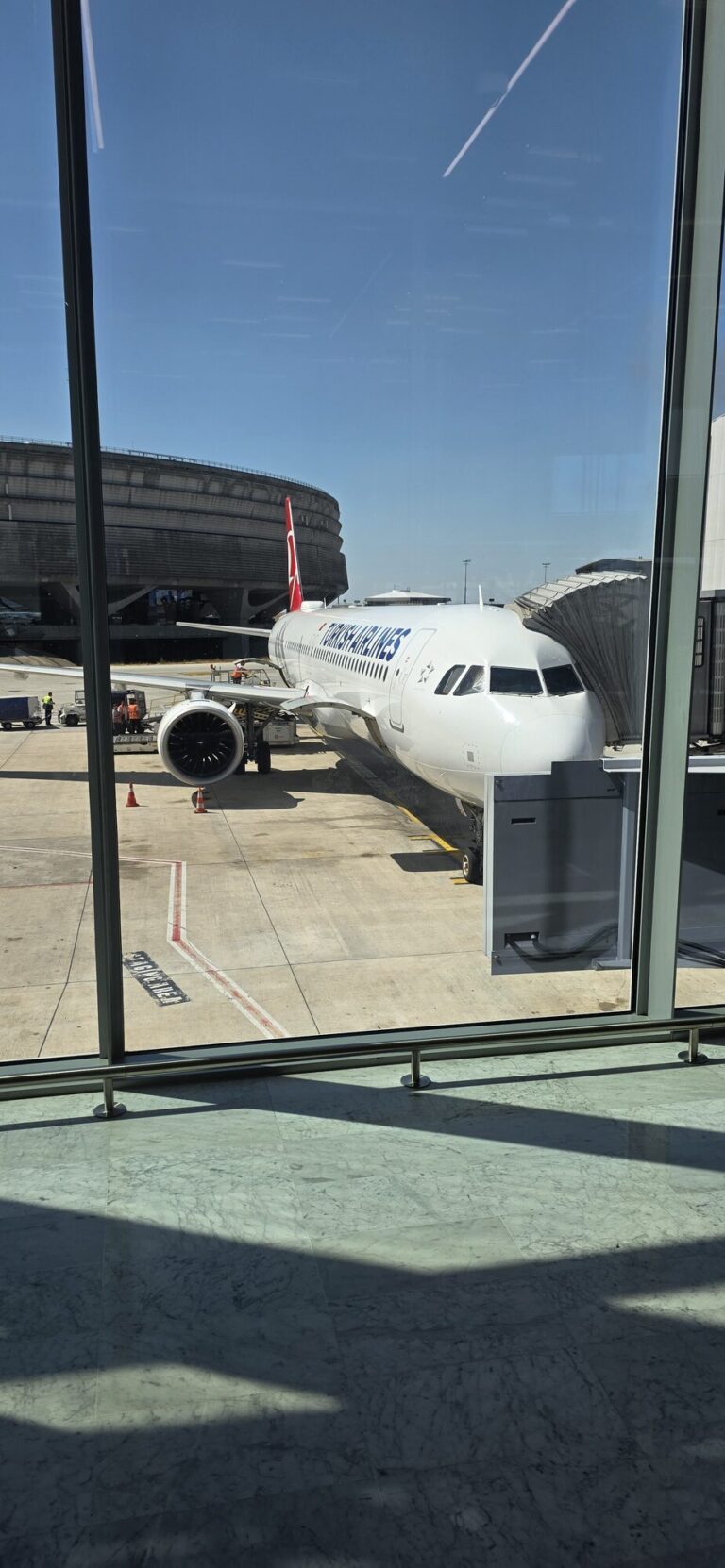
Six weeks, four countries, one full camera. The gate at Charles de Gaulle, a plane pointed at Istanbul, and the long hop home to the studio. Last post from the road.