
Drawing Koalas, Now That They Are Endangered
Ink drawings of koalas made by hand in Dayboro. What changed after the 2022 endangered listing, the one that sold, and what is still on the wall.

Yesterday I told you Arles wears photography on the outside. Pasted on the render, curling in the sun. That was half the day. This is the half I spent indoors, and it is the half I actually came for.
Start with the one that flattened me.
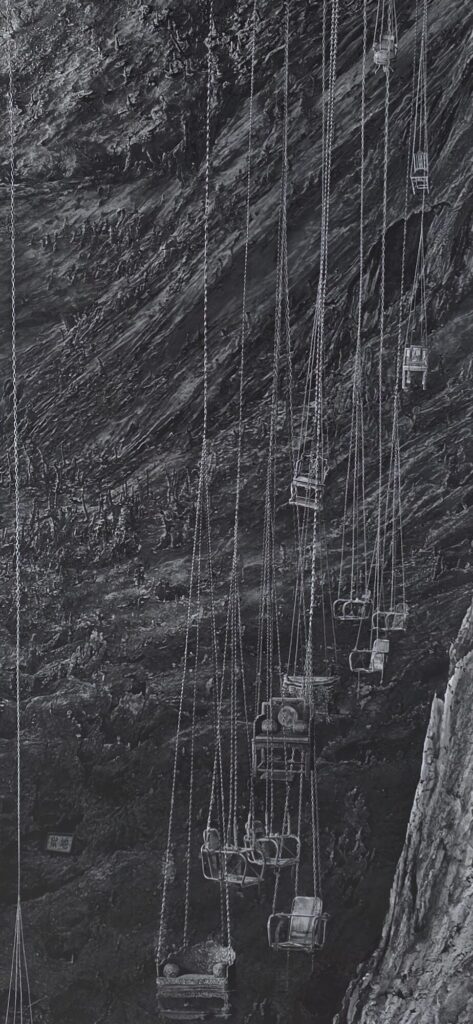
Zhang Lanpo. Chinese, teaches, lives down in Zhaoqing in Guangdong, and he has a show here called L’Épopée du Géant, the epic of the giant, up until Monday in the old Bourse du Travail. I nearly walked past the door.
Look at what that is. A cliff, and hanging off it on long chains, dozens of little seats and baskets and cages. It reads as a drawing before it reads as a photograph. All those verticals falling through a diagonal wall of rock, in silver and black with no middle grey to speak of. I stood there working out how you would get it in ink, and the answer is you would not. You would spend a year on the chains alone.
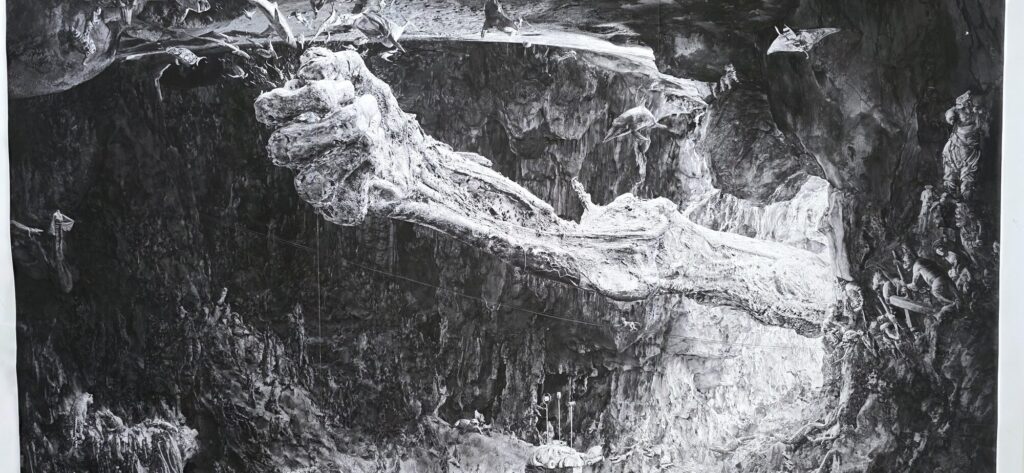
And then the giant. Something pale and enormous laid across the dark of the rock, part bone, part limb, part landslide, with hundreds of small white marks scattered over the cliff around it. The title says giant. Stand there two minutes and you stop asking whether that is literal.
What I take from these is the nerve of the scale. He printed them too big to hold in your eye. You have to walk along them, the way you walk along a wall. That is not photography behaving like a picture, it is photography behaving like a place.
Earlier, over at the old hospital, a room of prints and a wall label that stopped me cold.
Eikoh Hosoe. Japanese, 1933 to 2024, and if you know one thing about him it is the dark stuff, high contrast bodies, the work that made his name. The prints on that wall were from a book he shot in 1967 called Taka-chan and I. A children’s story, written by Betty Jean Lifton, about a Weimaraner named Runcible who digs a hole in the sand at Cape Cod and comes out in Japan.
A dog. He photographed a dog digging to Japan. The man whose reputation is built on darkness gave a whole book to a fairy tale, and the pictures are still his pictures, black lava beaches and weather coming in, but they are in service of a story a seven year old can follow. Next to him on the same wall, a Stefan Moses from 1964, German, 1928 to 2018, according to the little green card underneath.
I have spent this whole trip quietly nervous that the illustration work and the serious work are two different careers. That wall says they never were.
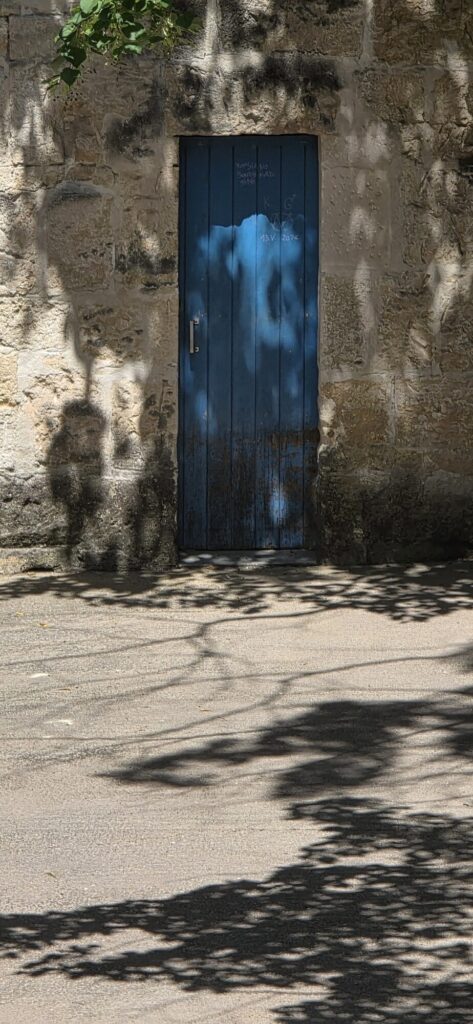
Then out into the yard to let my eyes settle, and there was this. One blue door, a wall gone the colour of bread, and a tree throwing the whole of itself onto the ground. That shadow does everything a good drawing does. Hard edge, soft edge, dense in the middle, falling apart at the ends.
Last stop, the photography school out past the arena.
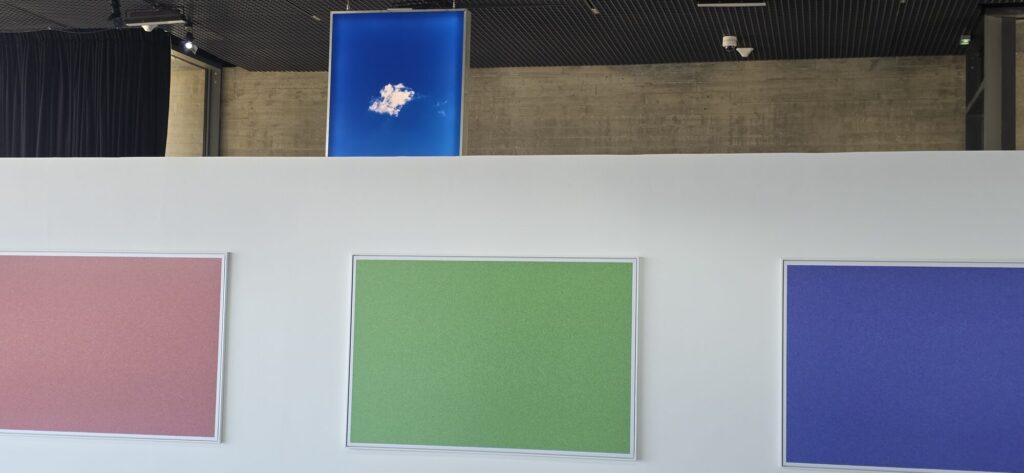
Three big frames on a white wall. Pink, green, blue, and nothing in any of them. Up above on the raw concrete, one small cloud in a very blue sky. I laughed, then stood there ten minutes, which is longer than I gave most of the actual photographs.
It is a good joke and it is completely serious. Three flat colours in frames, one real sky hung above them, and you have made the whole argument about what a photograph is without saying a word. That wall knew when to stop.
Train back to the Sorgue, and a head too full to draw. Which is the correct way to leave Arles.
Ink drawings of koalas made by hand in Dayboro. What changed after the 2022 endangered listing, the one that sold, and what is still on the wall.

They come through the gums before a storm and the whole paddock hears them first. Four birds, one flash of red, and the hardest thing I have ever tried to put down in ink.
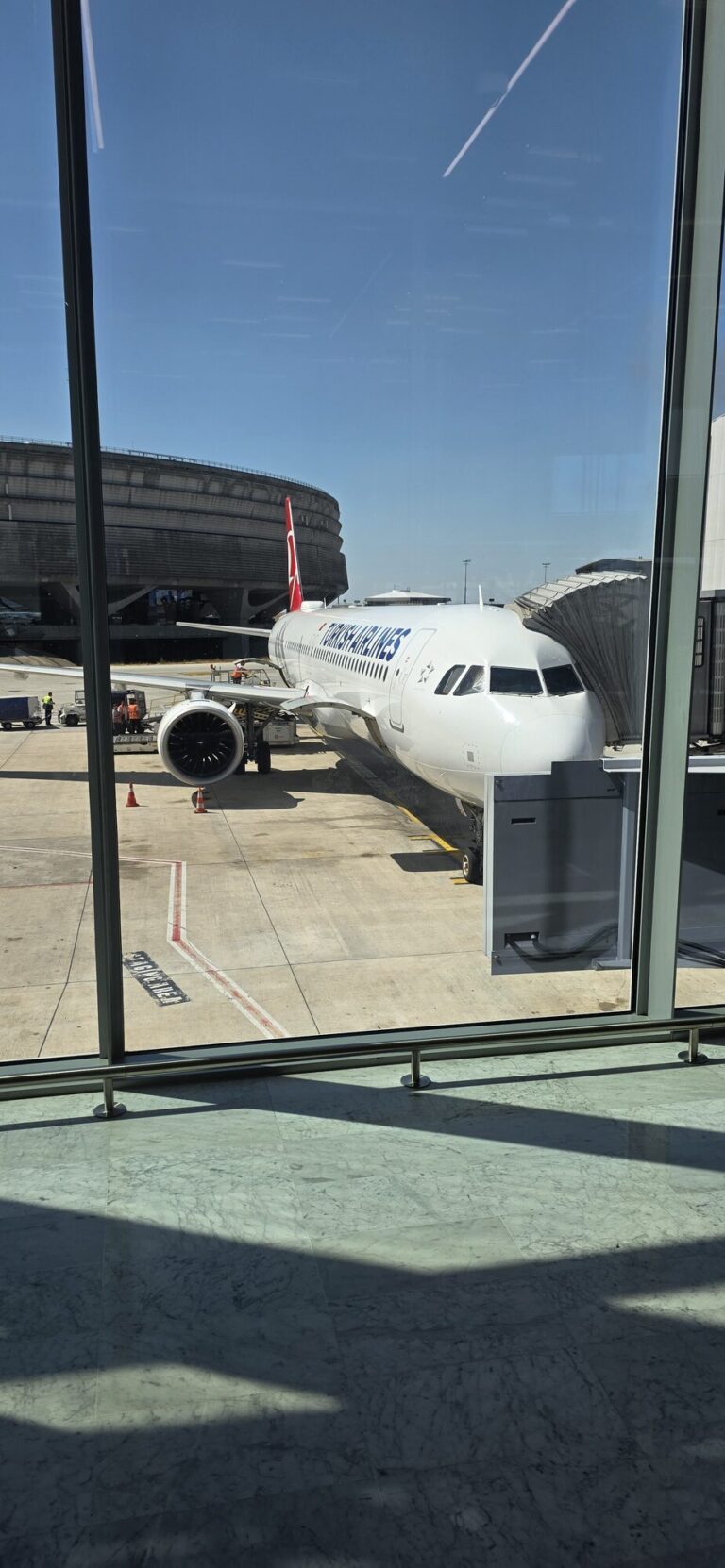
Six weeks, four countries, one full camera. The gate at Charles de Gaulle, a plane pointed at Istanbul, and the long hop home to the studio. Last post from the road.