
Drawing Koalas, Now That They Are Endangered
Ink drawings of koalas made by hand in Dayboro. What changed after the 2022 endangered listing, the one that sold, and what is still on the wall.

Right. The painters’ square. I have wanted to see this one properly since before I left home, and not as a tourist. As somebody who might one day have to sell her own work off a small table in a public place.
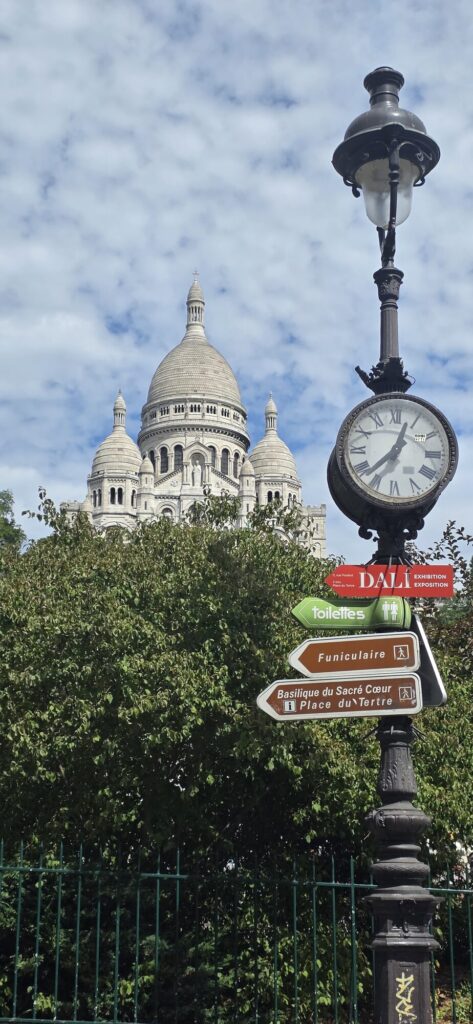
This is what the top of the hill looks like before you get to the famous bit. Domes behind a tree, an iron lamp post with a clock bolted to it, and a stack of little arrows. Dalí, two minutes away. Toilets. Funicular. Basilica and the square, same arrow. I love that the surrealist and the public conveniences share a pole.
Here is what I went up to learn, and it matters if you have ever thought about street pitches. Those painters are not just turning up. Every one of them holds a concession from the city, a permission the town hall has been handing out since 1980, renewed every single year, and it comes with a footprint of one square metre. One. Around 140 licensed spots, depending on who you ask. The waiting list runs for years, and only five or six come free annually, when somebody moves away or dies.
A square metre of Paris, and you queue most of a decade for it. The concession also certifies you painted the work yourself, which I think is rather beautiful.
And then I stood in that square for forty minutes and did not photograph one single easel. Not one! The walls got me on the way through and I never recovered.
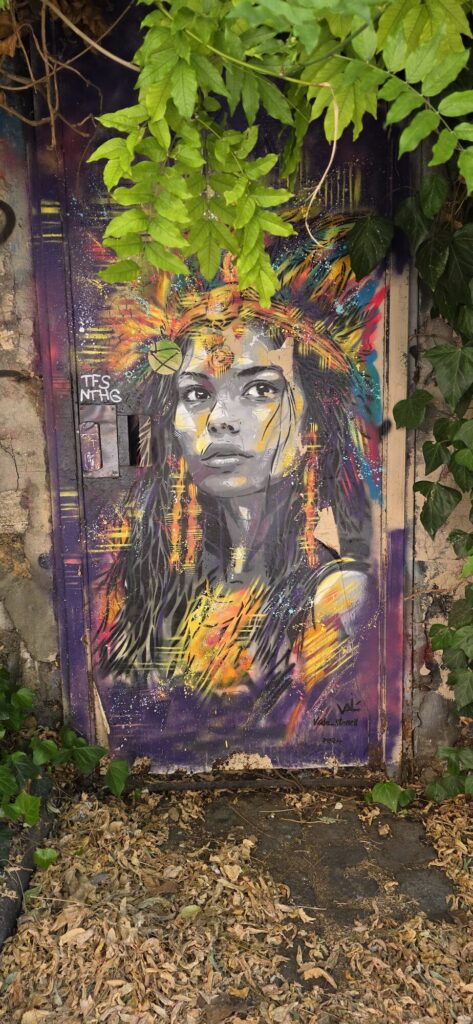
Look at how this is built. The face is done straight, grey and careful and absolutely correct, and everything around it is torn open with colour. Multi layer stencil, and he signs it in the bottom corner like a painting, which of course it is. Valé Stencil, a French artist who has been putting indigenous portraits up on this hill and on other walls around the world.
The bit I keep coming back to is the restraint. He could have coloured her face. He did not. All that noise, and the one calm thing in the middle is the person.
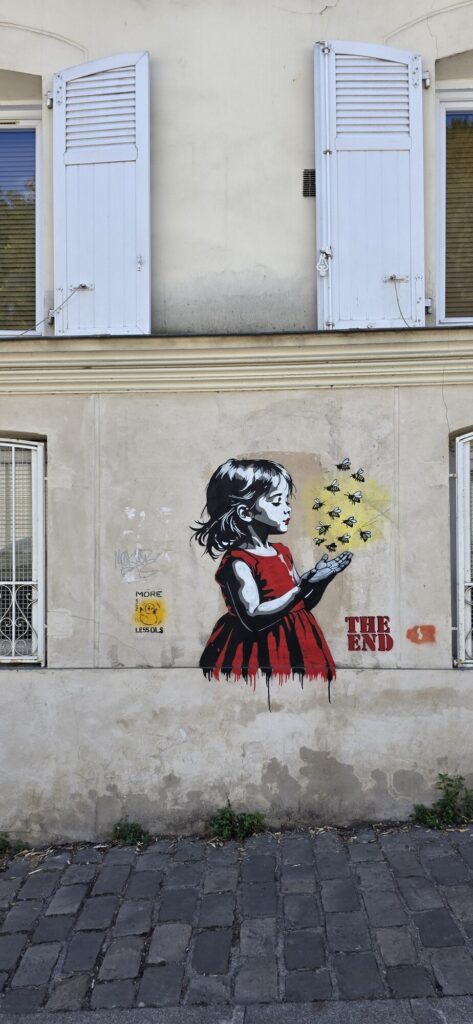
Then this one, on a plain wall under two closed shutters. A girl holding out her hands, a swarm coming down into them, and two words stencilled beside her in red. The dress bleeds at the hem where the paint ran, and I honestly cannot tell you whether that was intended or a happy accident. I am choosing to believe accident, because that is more encouraging for the rest of us.
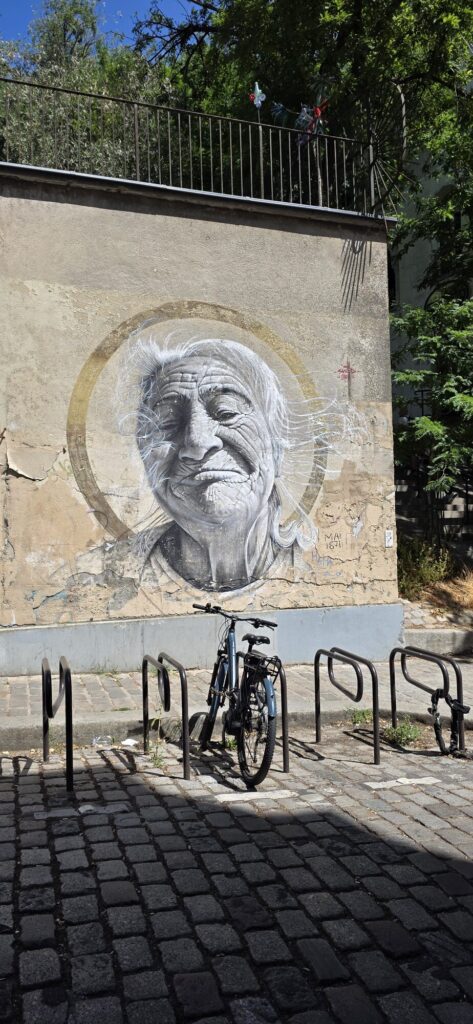
This one stopped me dead. Grey and white, no colour at all, a gold ring behind the head, and every line of that face earned. Wisps of hair drawn out into the render so the wall itself does the work. That expression is amused. Not sweet, amused, like they have heard the joke before.
Scratched on the wall alongside, small enough to miss, somebody has written MAI 1871. Which on this hill is not a random date. The Commune started right here in March of that year when the army came up for the cannons, and it ended in the last week of May, in the part everybody calls the bloody week. A saint’s halo, on that wall, with that date next to it.
Nobody was looking at it. The bike rack was empty, the cobbles were empty, and a couple of streets away people were queueing to have their portrait done. That is Montmartre, I think. The whole place is a working lesson in where the value gets put and by whom.
Ink drawings of koalas made by hand in Dayboro. What changed after the 2022 endangered listing, the one that sold, and what is still on the wall.

They come through the gums before a storm and the whole paddock hears them first. Four birds, one flash of red, and the hardest thing I have ever tried to put down in ink.
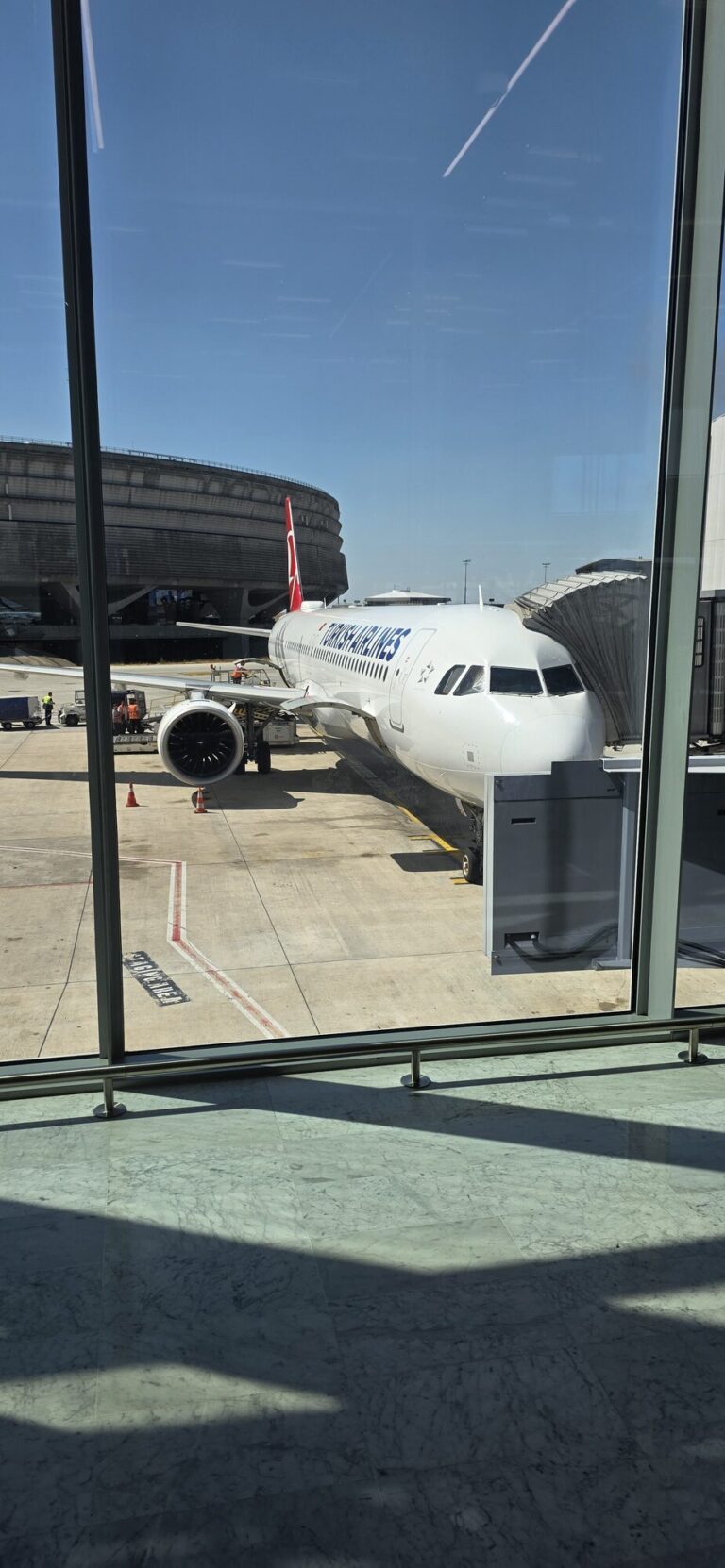
Six weeks, four countries, one full camera. The gate at Charles de Gaulle, a plane pointed at Istanbul, and the long hop home to the studio. Last post from the road.