
Drawing Koalas, Now That They Are Endangered
Ink drawings of koalas made by hand in Dayboro. What changed after the 2022 endangered listing, the one that sold, and what is still on the wall.

There is a watchtower on the hill above Varenna that has been looking down the middle of this lake for about a thousand years, and the people who run it have decided the best thing to do with it is fill the garden with ghosts.
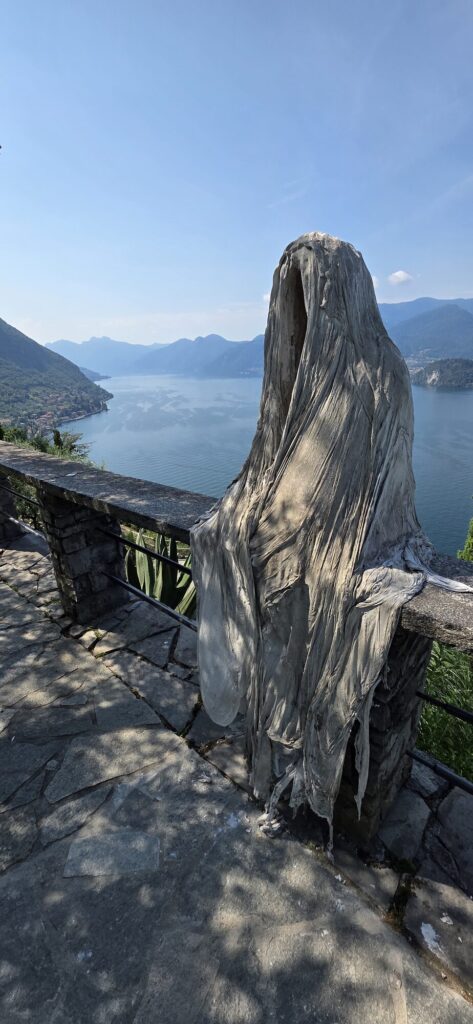
They make these fresh every year. A volunteer stands still, they lay the plaster over them, it sets, and then the person walks out and leaves the shape behind. The souls of Varenna, they call them.
Look at what that does. Every fold in that thing is a real fold, made by a real body, on a real day. It is a drawing that was taken directly off a person instead of being observed and copied and got slightly wrong. And then they took the person away.
The empty hood is doing the work. Your eye goes there first looking for a face, finds nothing, and comes back out to read the shoulders instead. Which is the same thing I was banging on about the other night, except somebody here has built a whole hillside out of it.
There is a legend attached, naturally. A Lombard queen called Theodolinda, one of the last people to properly live up here, still wandering about on moonless nights. I have no view on that. The ones made of plaster are quite enough.
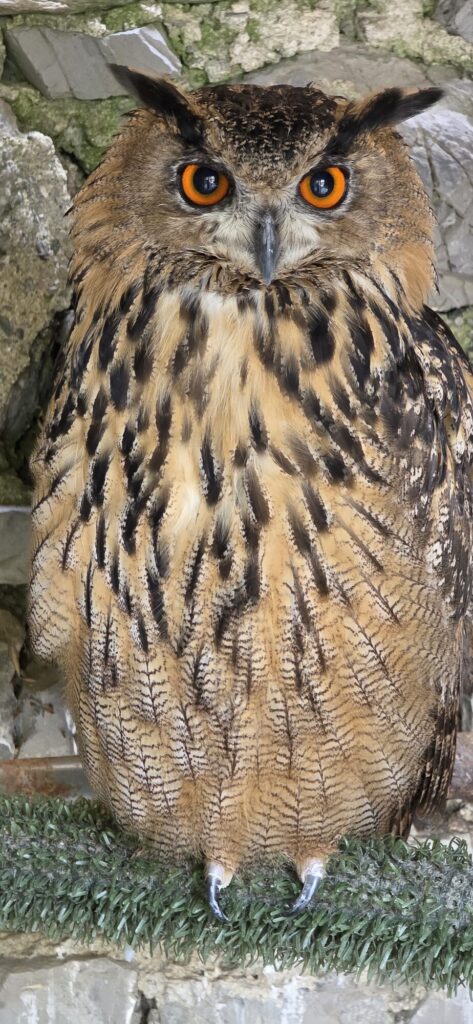
Then round the corner, this. They fly birds of prey here, falcons and eagles and owls, straight over people’s heads, and between demonstrations the owls sit and consider the public.
Eagle owl, I am fairly sure, on the ear tufts and those eyes. And I stood in front of it far longer than was reasonable because I could not work out where the drawing was.
All that barring on the chest, every feather a dash of dark on cream, and it should read as pattern. It does not. It reads as volume, because the marks get closer together where the body turns away. That is exactly what hatching is meant to do and almost never does when I try it. Four hundred million years of practice, I suppose.
Also, and I want to be honest, it looked at me like I had turned up without an appointment.
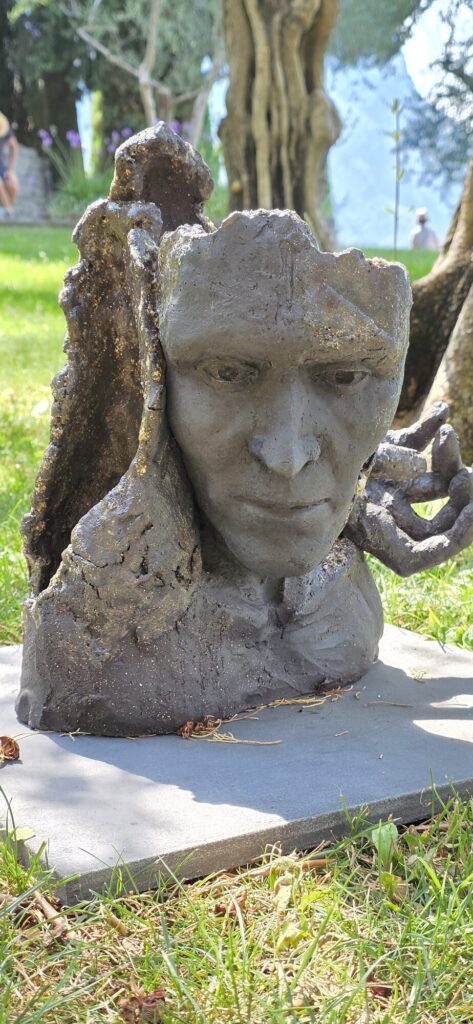
And then in the grass under the olives, a craft show. Ceramics and jewellery, just sitting out on the lawn, and a board explaining raku for anybody who wandered past.
If you have not met it, raku is Japanese and it is close to gambling. You glaze the piece, fire it, then haul it out of the kiln still glowing and drop it straight into a box of newspaper or dry leaves or sawdust. The shock cracks the glaze. The fire eats the oxygen and turns the bare clay black. Then you put the whole thing in water to stop it.
Which means the maker does maybe sixty per cent of it and the accident does the rest. No two ever come out the same and you cannot go back and fix one.
I have been drawing in biro all week for exactly that reason and I did not have a word for it until I read that board. Turns out potters got there first, several hundred years ago, and built a whole discipline out of not being able to take it back.
Ink drawings of koalas made by hand in Dayboro. What changed after the 2022 endangered listing, the one that sold, and what is still on the wall.

They come through the gums before a storm and the whole paddock hears them first. Four birds, one flash of red, and the hardest thing I have ever tried to put down in ink.
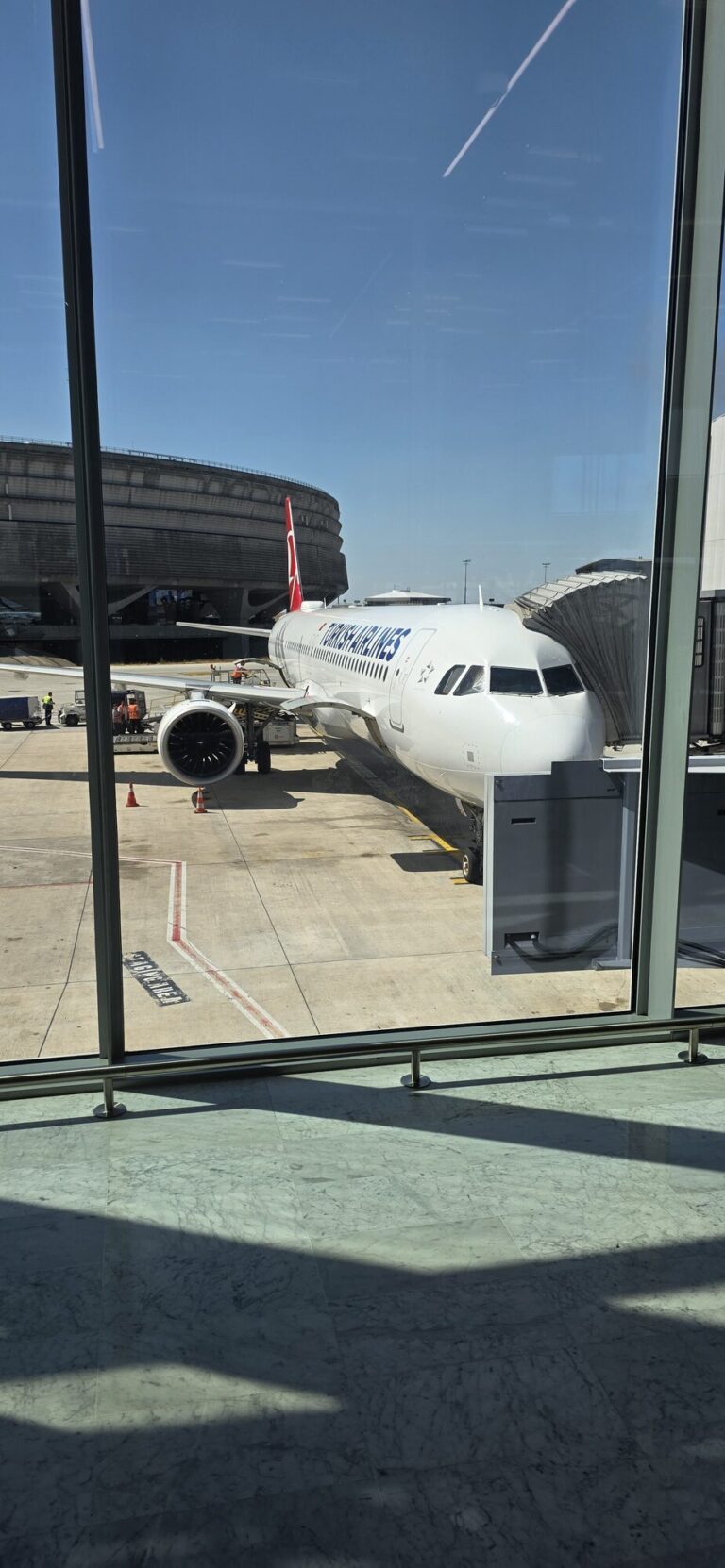
Six weeks, four countries, one full camera. The gate at Charles de Gaulle, a plane pointed at Istanbul, and the long hop home to the studio. Last post from the road.