
Drawing Koalas, Now That They Are Endangered
Ink drawings of koalas made by hand in Dayboro. What changed after the 2022 endangered listing, the one that sold, and what is still on the wall.

Every Sunday this town takes all its furniture outside.
I have been here nearly a week and still was not ready for it. L’Isle-sur-la-Sorgue is the third antiques town in Europe after Paris and London, over three hundred dealers open all year, and then a Sunday on top of that. I was out at twenty to nine to beat the heat, which was everybody else’s idea too.
First thing I passed was this, still pasted on a wall.
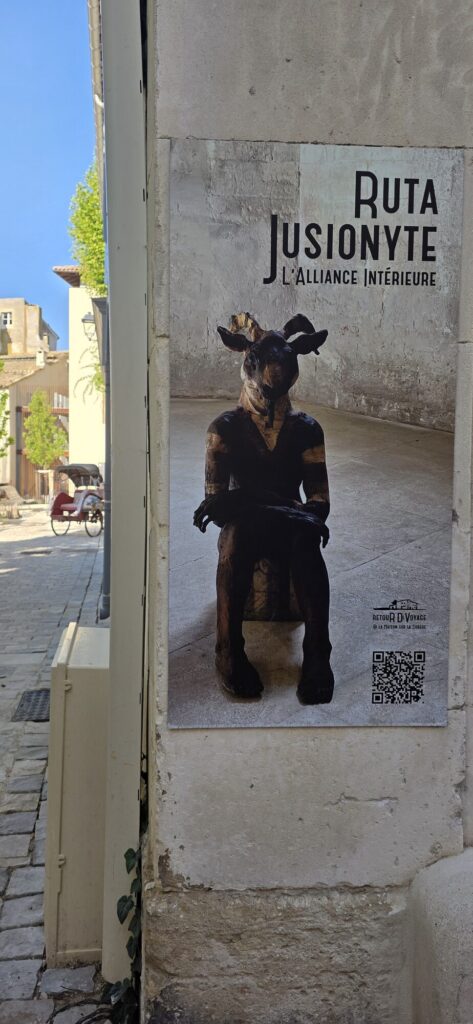
Ruta Jusionyte, L’Alliance Interieure. A seated figure with a stag’s head and very human hands, sitting the way a tired person sits. That show finished at the end of June and nobody has taken the poster down, and honestly, good. It is doing more for that street than most things hanging in galleries. She works in ochres and ambers, half myth, half animal. If she shows near me again I will be there.
A few doors on, somebody had left a leaflet out. Original photographs by Jurek Nems. Architect, painter, photographer, in that order, which tells you something about a life.
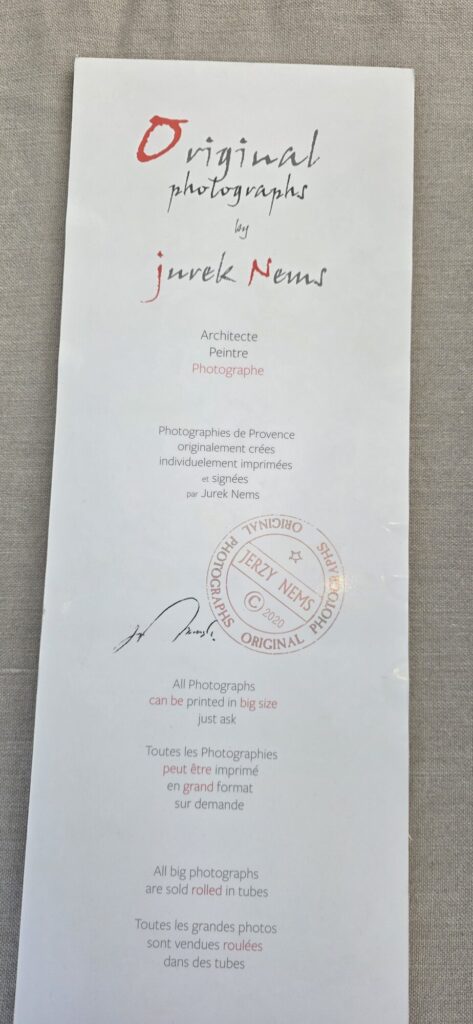
Read the small print on that. Signed. Stamped. All photographs can be printed in big size, just ask. All big photographs are sold rolled in tubes. That is not art waffle, that is a man answering the two questions every buyer actually has, how big and how do I get it home. I have been writing an essay’s worth of notes on how people here sell, and he did it on one piece of paper.
Then the market proper.
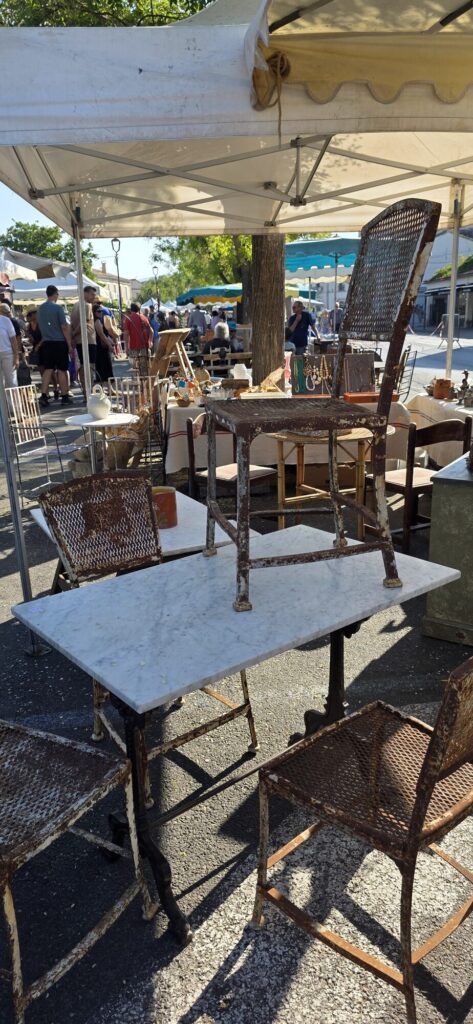
Marble tops, iron legs, rusted garden chairs with the cane blown out of the backs. In Australia we would call that a trip to the tip. Here it is stock, and it is priced accordingly. What gets me is that nobody has cleaned any of it. The rust is the product. Somebody worked out a long time ago that people are not buying a chair, they are buying forty years of somebody else’s garden.
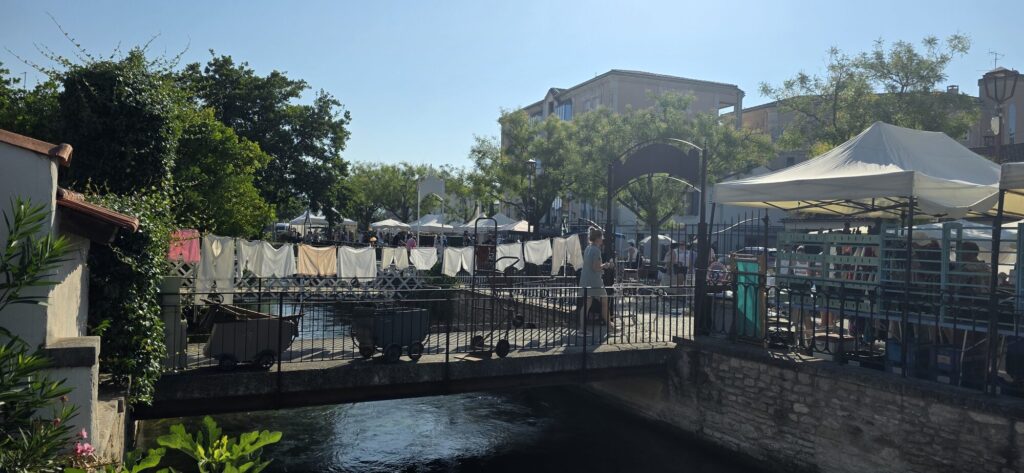
And then the canal, which is where I stopped being a shopper. Somebody had pegged old linen along the whole length of the railing, and it was lifting in the draught off the water. White cloth, black iron, water underneath throwing light up into it. If you want to learn how a soft thing behaves against a hard thing, stand on that bridge for ten minutes. It is worth more than a term of life drawing and there is no model fee.
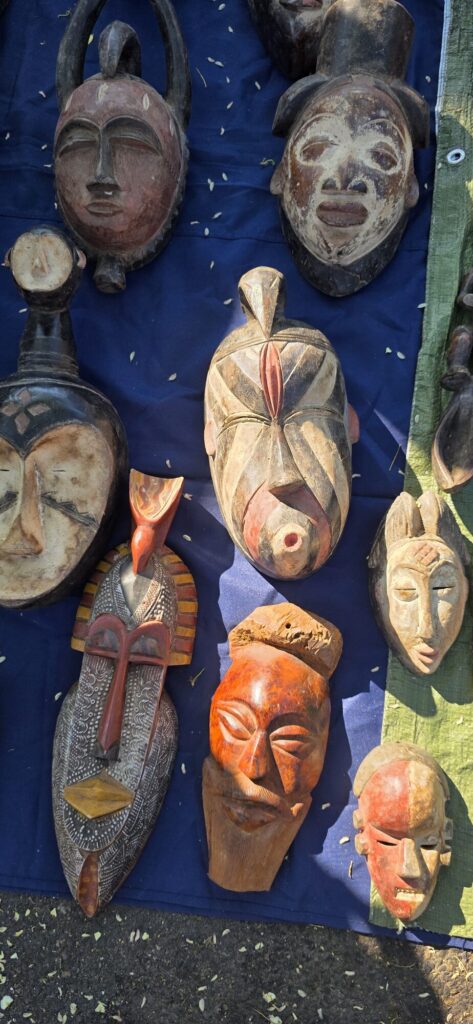
Further along, a whole tarp of carved masks. I sat on my heels over these for a while. Every one of them has solved the same problem a different way, which is the problem I have been chewing on since Venice. How much do you take away before a face stops being a face. Turns out the answer is nearly everything, as long as you keep the shadow under the brow.
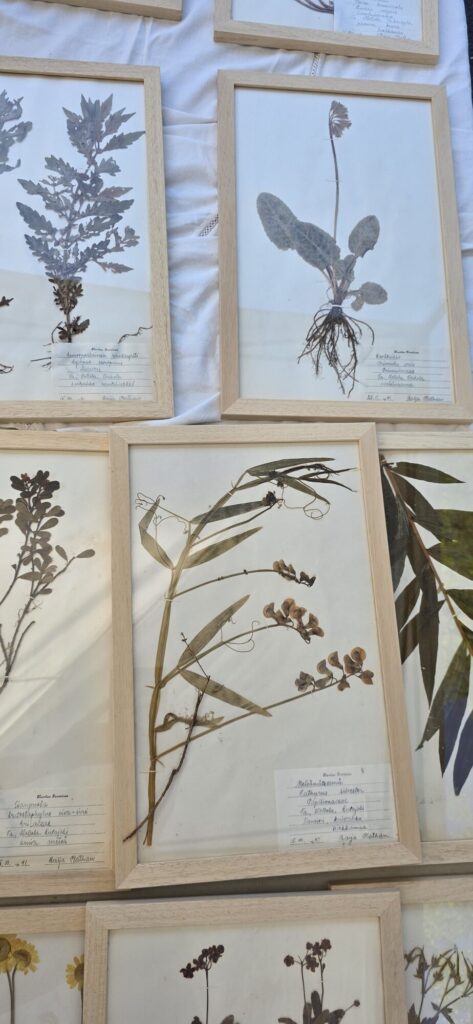
Two stalls on, the thing I would have bought if I had a house rather than a suitcase. Old herbarium sheets, framed. Each one a pressed plant, roots left on, and a label written by hand in that careful sloping script. Somebody dug those up, laid them flat, wrote down what they were, and it has outlived them by a hundred years. It is a drawing. It is just a drawing made with the actual plant.
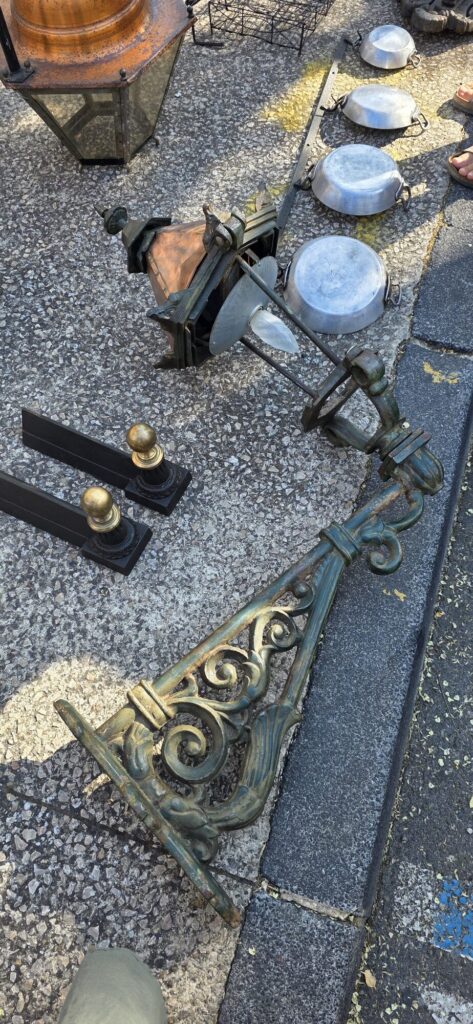
Last one, then home before the heat won. A wrought iron lantern bracket lying flat on the pavement, gone green, all scroll and curve, copper pans lined up beside it like plates. Somebody bent that by hand a very long time ago. My whole practice is one line doing as much work as it can, and there it was, on the ground, next to the saucepans.
Three hundred dealers, one river, and every single thing out in the open where you can see the price. I came here to work out how art and money sit together in this town. Turns out they sit on the footpath, next to each other, all day Sunday.
Ink drawings of koalas made by hand in Dayboro. What changed after the 2022 endangered listing, the one that sold, and what is still on the wall.

They come through the gums before a storm and the whole paddock hears them first. Four birds, one flash of red, and the hardest thing I have ever tried to put down in ink.
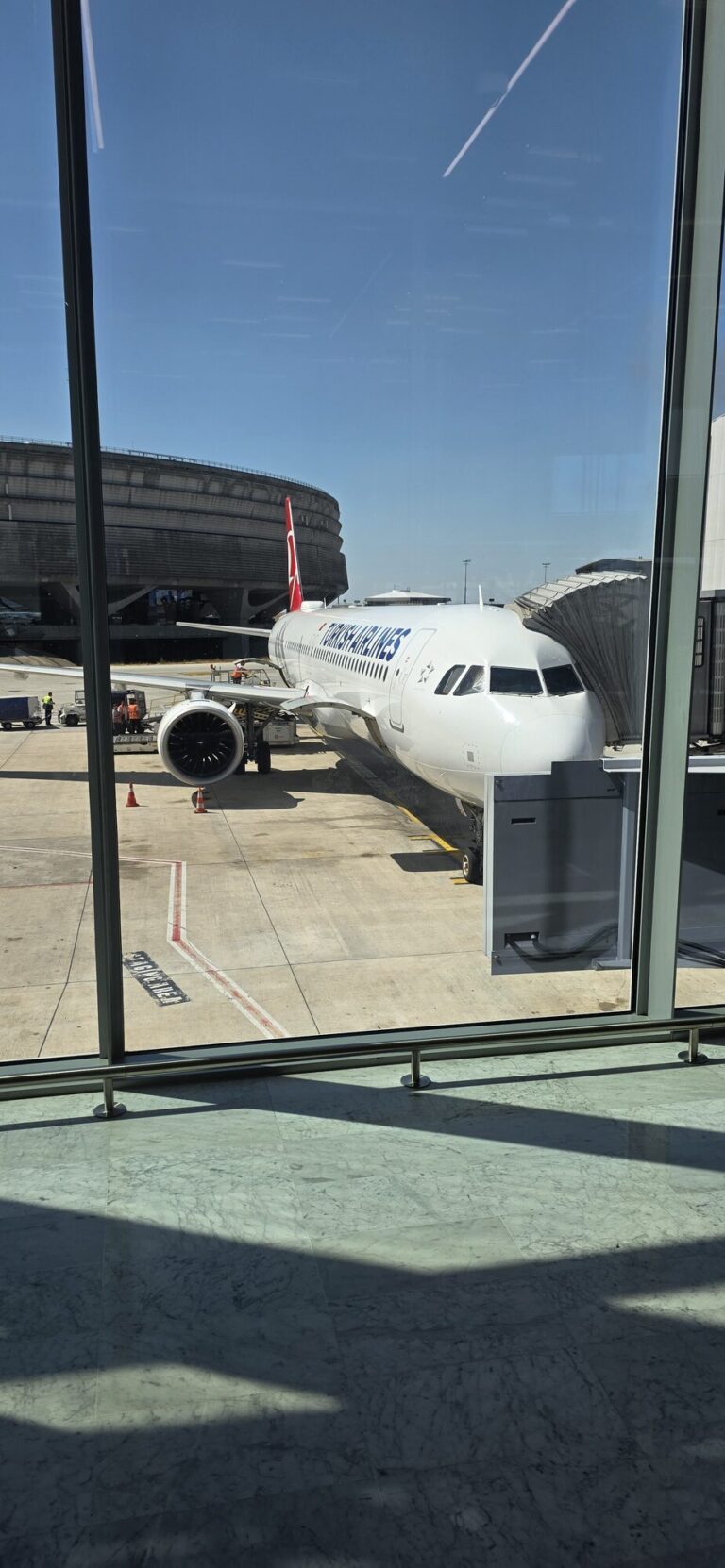
Six weeks, four countries, one full camera. The gate at Charles de Gaulle, a plane pointed at Istanbul, and the long hop home to the studio. Last post from the road.