
Drawing Koalas, Now That They Are Endangered
Ink drawings of koalas made by hand in Dayboro. What changed after the 2022 endangered listing, the one that sold, and what is still on the wall.

Saturday had one word on it. Paper.
That was the whole plan for Fontaine-de-Vaucluse, written down in Australia months ago in the smug handwriting of a woman who thought she would be organised. Go to the paper mill. Get paper. Come home. Then I got off at ten past nine and the village had other ideas, as they all do.
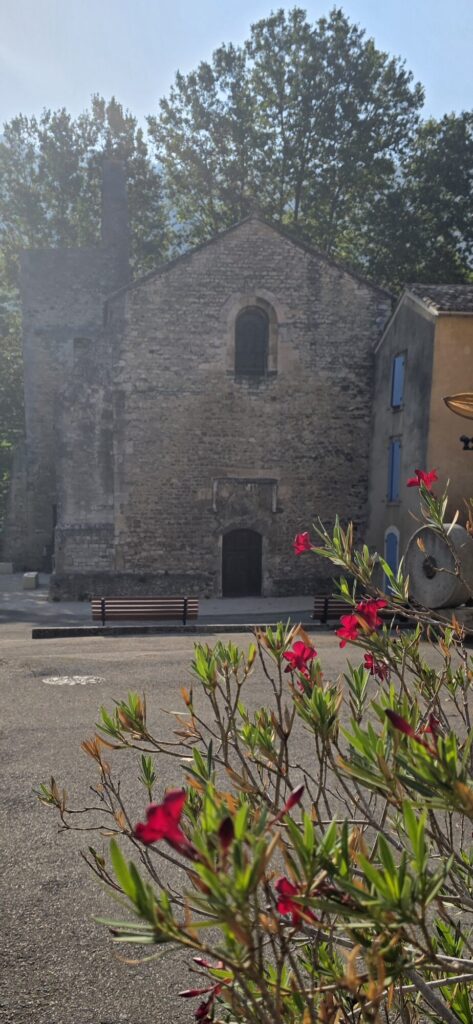
Empty square, old church, red oleander doing all the shouting. And against the yellow wall, casual as an old bicycle, a millstone. That is the tell. You do not lean a millstone on a house unless your village has had so many, for so long, that one more is furniture.
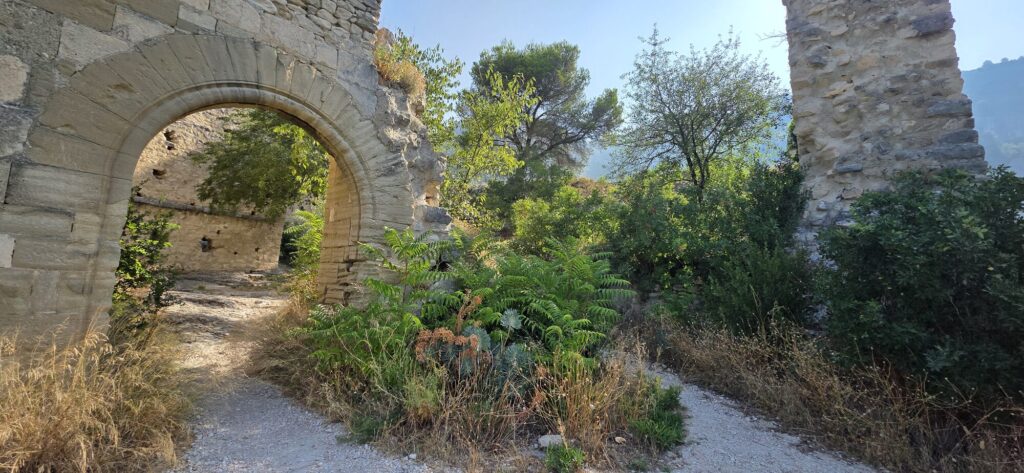
So of course I went up the hill instead of to the mill. Past the last houses into what is left of the walls, where a stone arch still stands with nothing behind it and the rest has gone over to fennel and figs. My favourite drawing problem. A made thing and a growing thing, arguing.
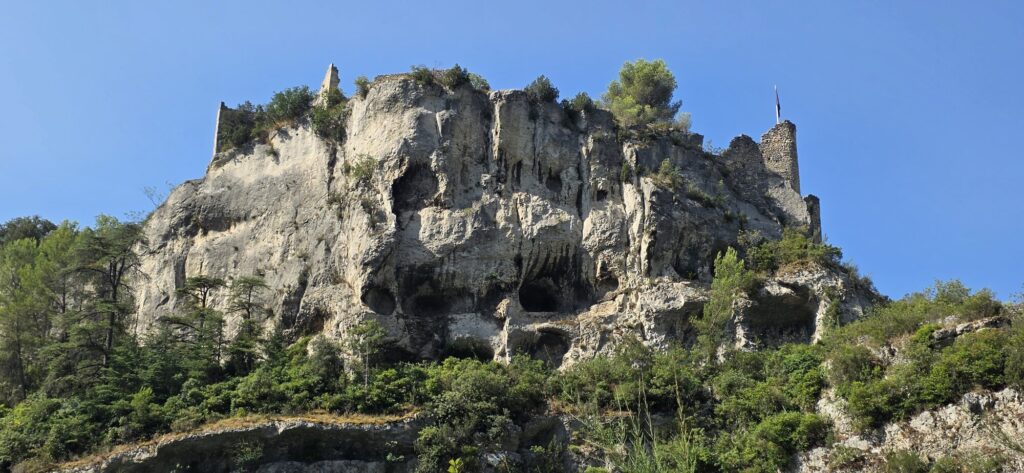
Then you turn around. A wall of pale rock with caves in it like eye sockets, and along the top, the ruins of the castle the bishops of Cavaillon put there. That is not a castle on a hill. That is a castle on a cliff that was already doing a very good impression of one.
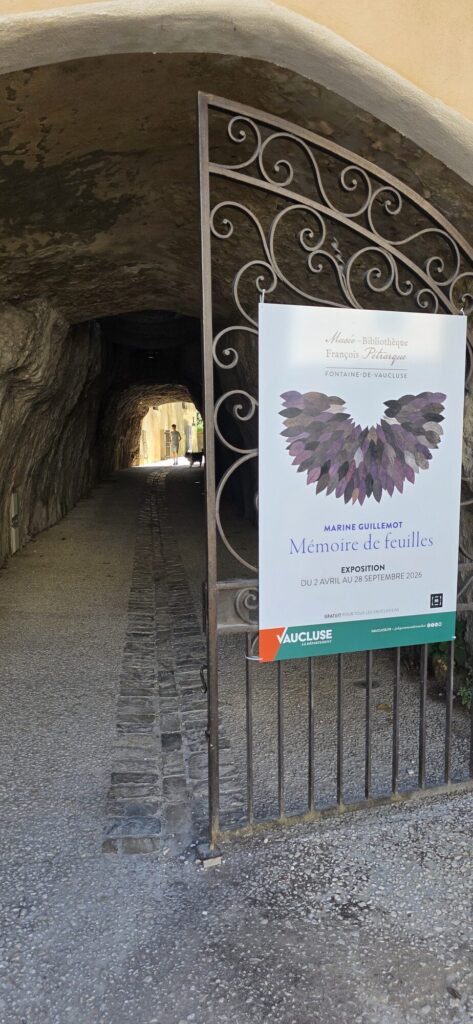
On the way down I found the gate to the Petrarch museum, and wired to the ironwork, a banner for the show on there now. Marine Guillemot, Memoire de feuilles, until the end of September. She takes Luberon leaves and turns them into paper. The image is a pair of wings made entirely of leaf. I stood in a cold stone tunnel looking at it, because I came here for paper and paper came looking for me first.
Petrarch made this valley his home from 1339 and wrote that the source was famous before he arrived and more famous after, because of him. Cheeky. Not wrong though. It is the biggest spring in France, the only way out for the rain that lands on Mont Ventoux and the plateau behind it. In August it does not come over the lip. It sneaks out of cracks in the riverbed lower down, and by the time it reaches you it is already a river with opinions.
And then, finally, the mill. Vallis Clausa. Free to walk into, which felt wrong given what is in there.
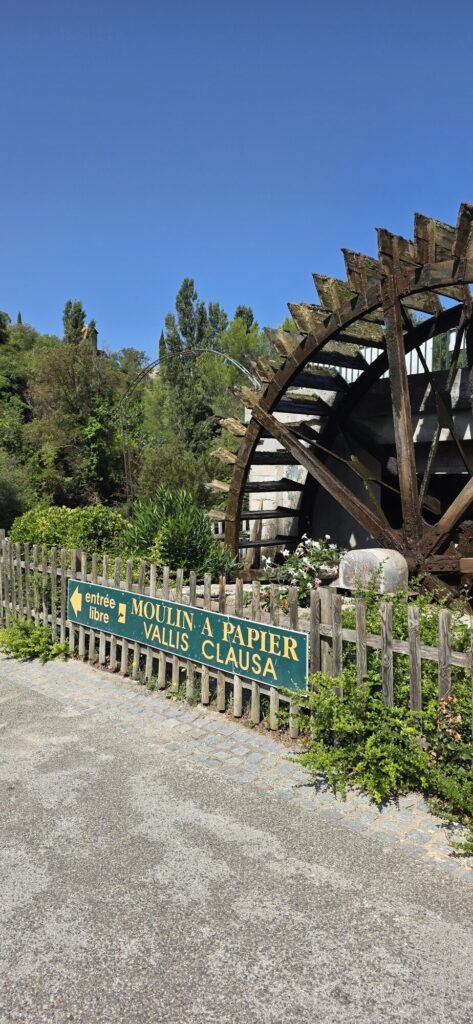
The wheel is seven metres across with forty-eight blades and the Sorgue turns it all day for free. Inside, that goes through cogs the size of cartwheels and comes out as mallets beating cotton and linen rag into slurry. Fifteenth century method, still running. Sound on for this one. That is a village’s whole old economy, working off a river and nothing else.
Round the back is the vat, and this is the bit I could not walk away from. Grey soup in a tub. A wooden mould, one dip, one lift, one shake, and there is a sheet of paper on the mesh with green petals set into it like something under ice. I have bought paper my whole working life and never once thought about the shake. The shake is everything. Same thing as a good line. One movement, committed, no going back.
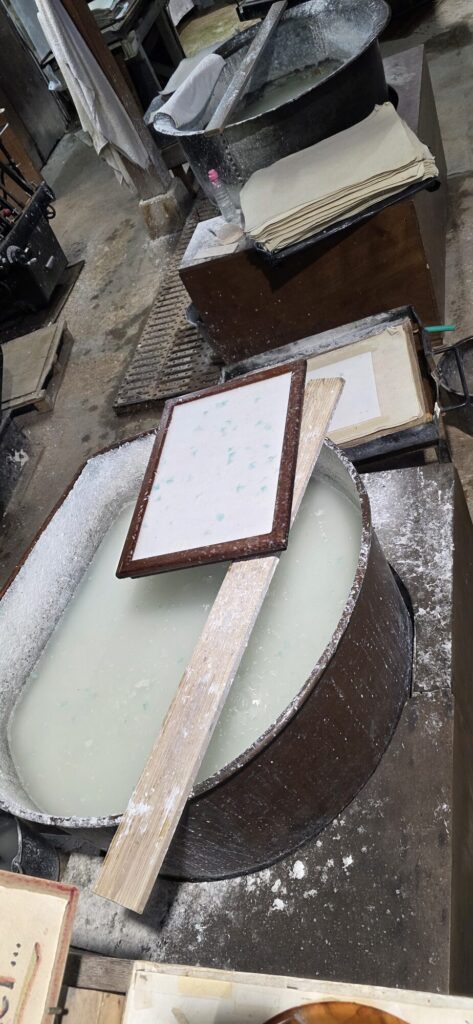
Sourcing handmade paper was the actual job on today’s list, and that vat rearranged what I thought I was sourcing. Not a nice product. A surface made by a shake, on a river, in a village that has been at it for centuries.
Late in the afternoon I ended up back at the water with my sandals in it, which is where I was always going to end up. Moving water is the thing I came to Europe to solve and it is still not solved. Turquoise underneath, white where it trips, going four ways at once while going firmly in one. You cannot draw all of it. You choose which lie to tell.
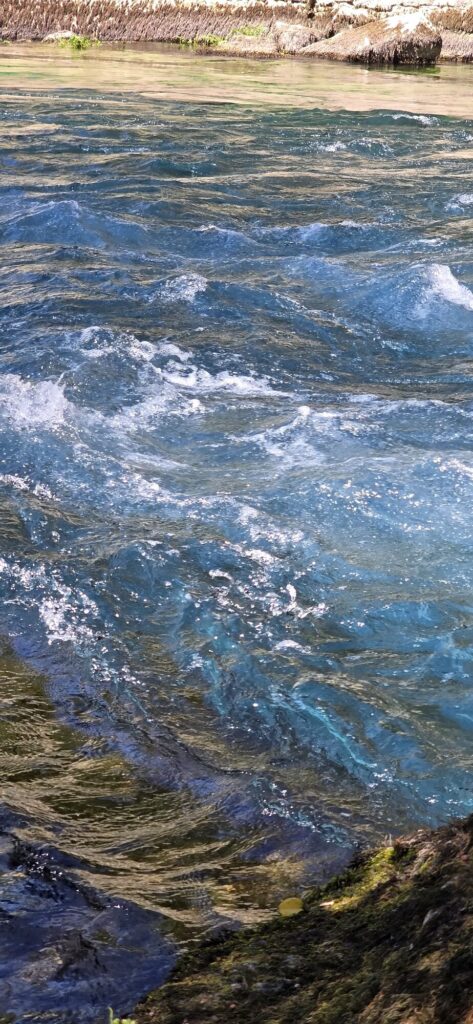
Tomorrow the whole of L’Isle turns into a market and I have to be up early. So that is Saturday. A cliff, a poet, a wheel and a wet page.
Ink drawings of koalas made by hand in Dayboro. What changed after the 2022 endangered listing, the one that sold, and what is still on the wall.

They come through the gums before a storm and the whole paddock hears them first. Four birds, one flash of red, and the hardest thing I have ever tried to put down in ink.
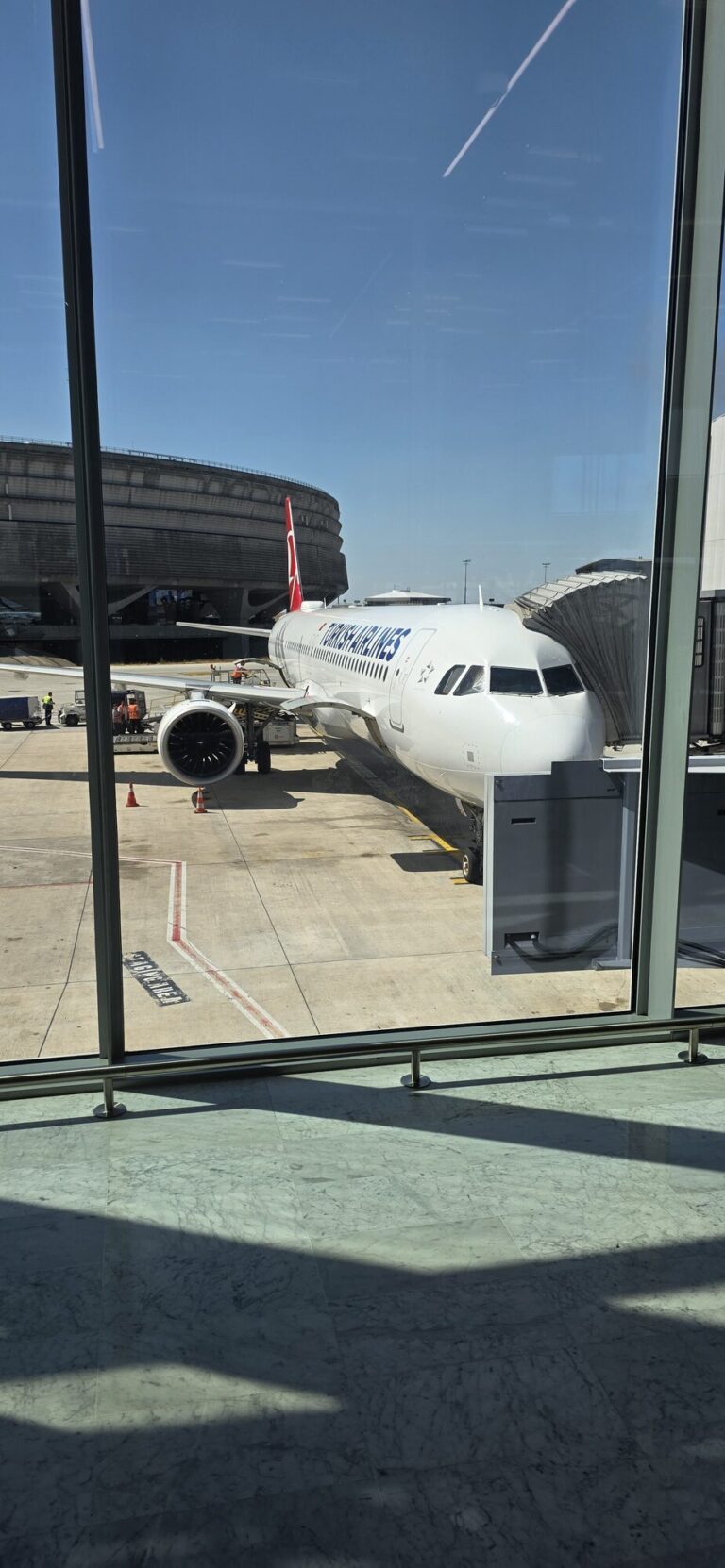
Six weeks, four countries, one full camera. The gate at Charles de Gaulle, a plane pointed at Istanbul, and the long hop home to the studio. Last post from the road.