
Drawing Koalas, Now That They Are Endangered
Ink drawings of koalas made by hand in Dayboro. What changed after the 2022 endangered listing, the one that sold, and what is still on the wall.

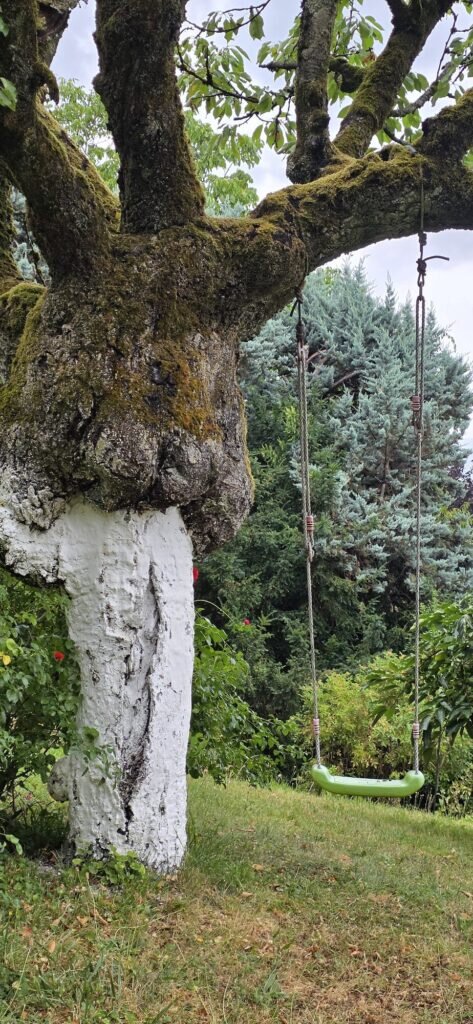
Sunday. Yesterday I promised you three galleries in one walk, a commercial one, an artist run one, and the big institutional one. Reader, I went up a hill instead. Out the door at eight, up the slope behind the old town where the streets stop being medieval and start being somebody’s back garden. Two hundred metres up I found this and stopped dead. An old fruit tree with a whitewashed trunk, bearded all over in moss, and a green plastic swing hanging off one arm on two rusted ropes. Nobody about. Just the ropes moving a little.
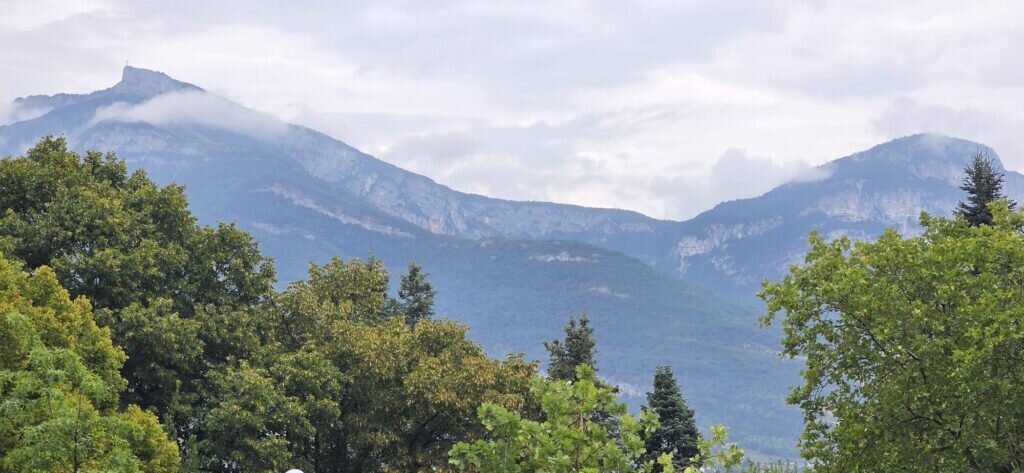
Keep climbing and the town drops away and the whole eastern side opens up. That is the Bauges, a long grey wall of limestone with the cloud sitting on top of it like a lid. On the far peak there is a little scratch against the sky, and I am fairly sure that scratch is the Croix du Nivolet. Twenty one and a half metres of cross, standing at 1547 metres, and there has been one up on that spot since 1861. You can see it from Chambéry and you can see it from Aix. Whole thing wants a very long brush and one very confident line.
So the galleries lost. I went north instead, up past the lake, to a gap in the rock at Grésy-sur-Aix where the Sierroz comes through. You walk in off an ordinary road, and then the ground simply opens. There is a walkway bolted to the cliff, rusted the colour of dried blood, and you stand on it and look straight down into a slot the water has been cutting for longer than anyone has been counting. Green on both walls, white water in the bottom of it, and the rock scooped out into shapes no hand would think of.
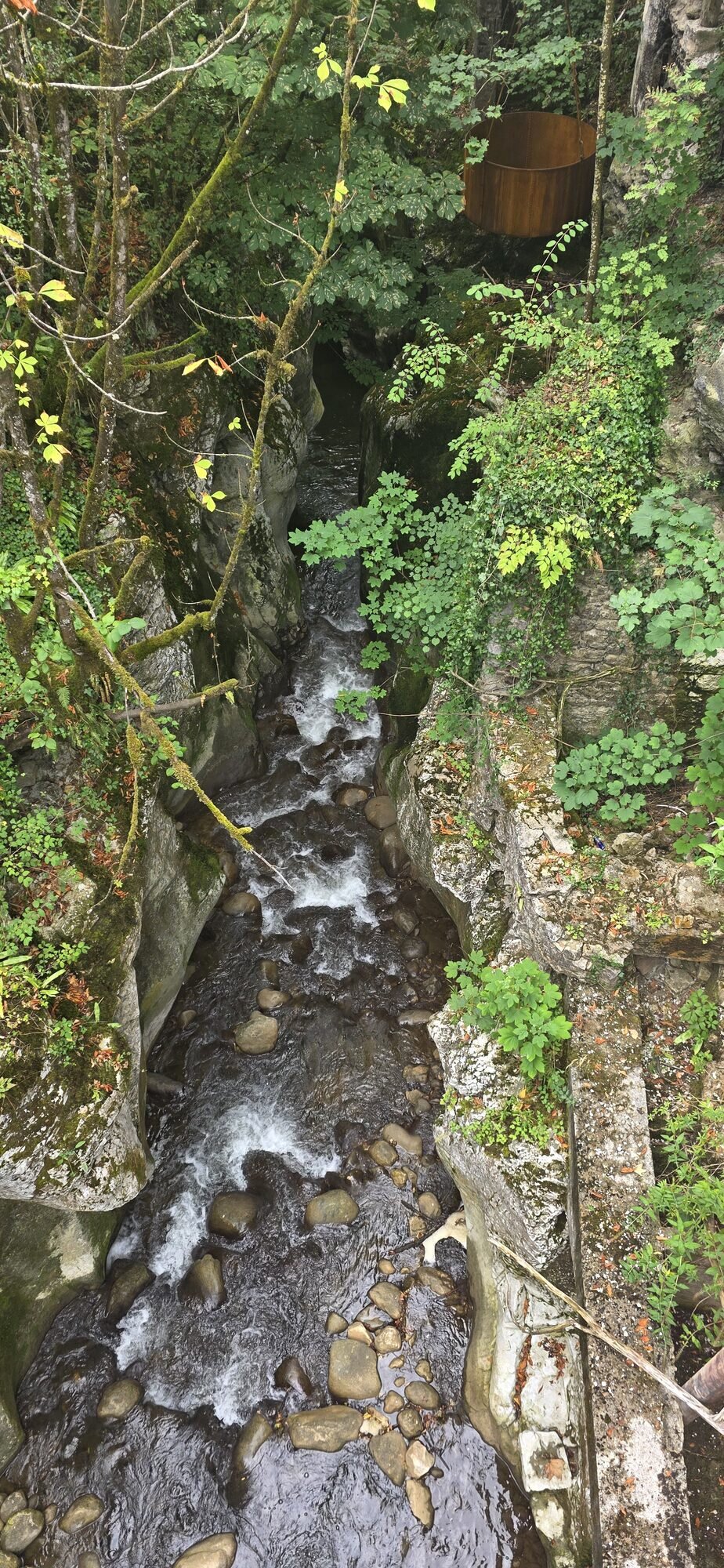
A photo does not carry the noise, so here is a few seconds of it. Turn the sound up if you can. That is the bit I want in the ink work, the way fast water stops being water and becomes a shape that holds still while it moves.
Then I read the sign, and the day changed shape on me. On 10 June 1813 a young woman came to look at this waterfall, exactly the way I just had. Adèle de Broc, twenty five years old, and she went into the water in front of her closest friend, who happened to be Hortense, Napoleon’s stepdaughter and queen of Holland, in Aix that summer taking the waters. Hortense had a stone put up on the spot. The inscription asks whoever comes after to go carefully over these abysses, and to think of the people who love them. Two hundred years on, standing over that same water, it lands.
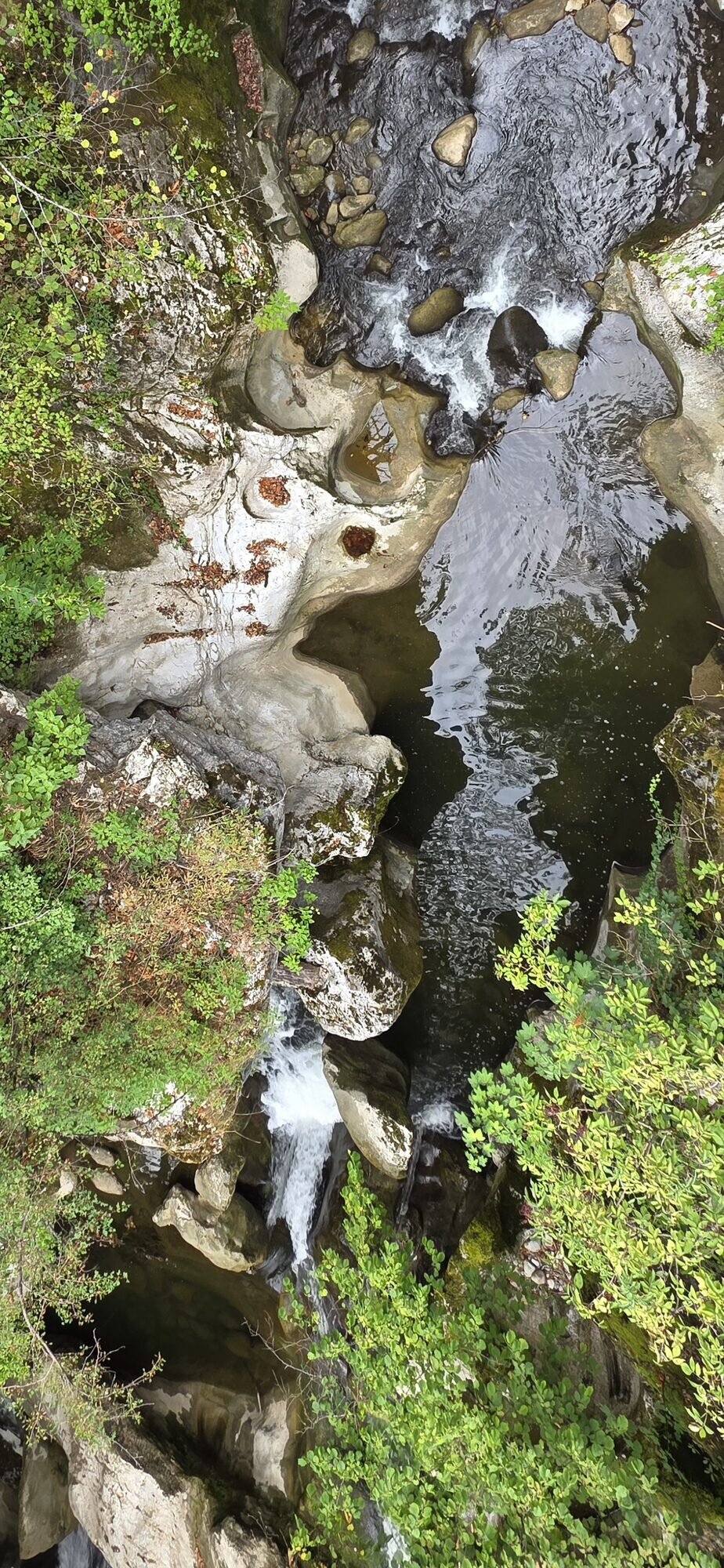
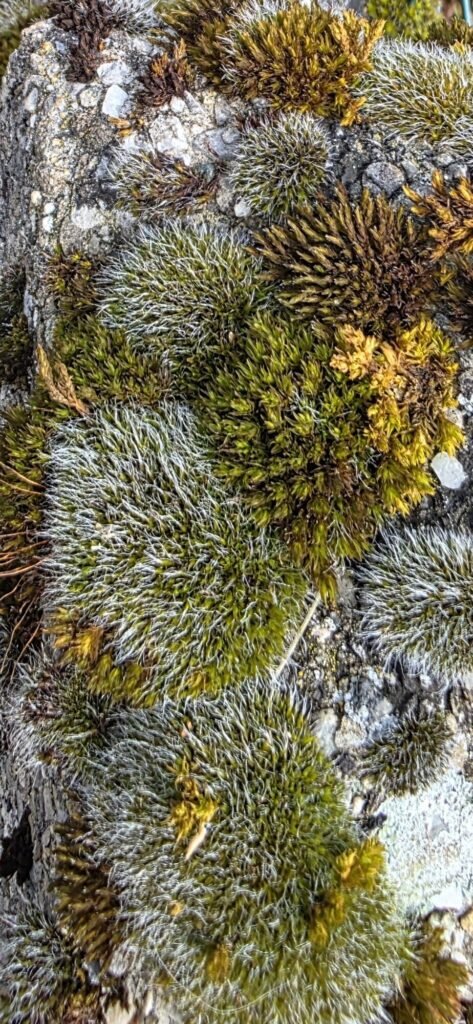
Further down I found the thing I will probably still be drawing next month. Moss on wet limestone, half of it green and half gone gold and rusty, sitting in grey rock with white pebbles pressed into it like teeth. No subject at all. Pure texture, and every clump of it a different mark. This is a black and white page waiting to happen.
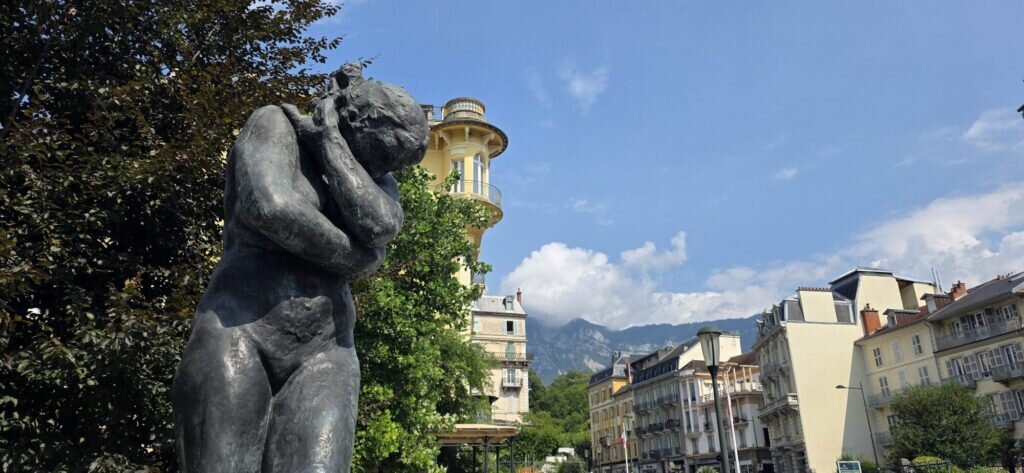
Aix-les-Bains for the afternoon, which is a spa town and knows it. Cream and yellow hotels, palms, wrought iron balconies, and the mountains standing straight up behind the roofs like a stage flat somebody dropped in. There is a museum here I had circled, the Musée Faure, in a villa with the glorious name of Villa des Chimères, built in 1902. Thirty four Rodin sculptures. Second biggest Rodin collection in France, second Impressionist collection too, Degas and Pissarro and Cézanne, up a hill in a spa town. And it is shut for restoration until 2027. Naturally.
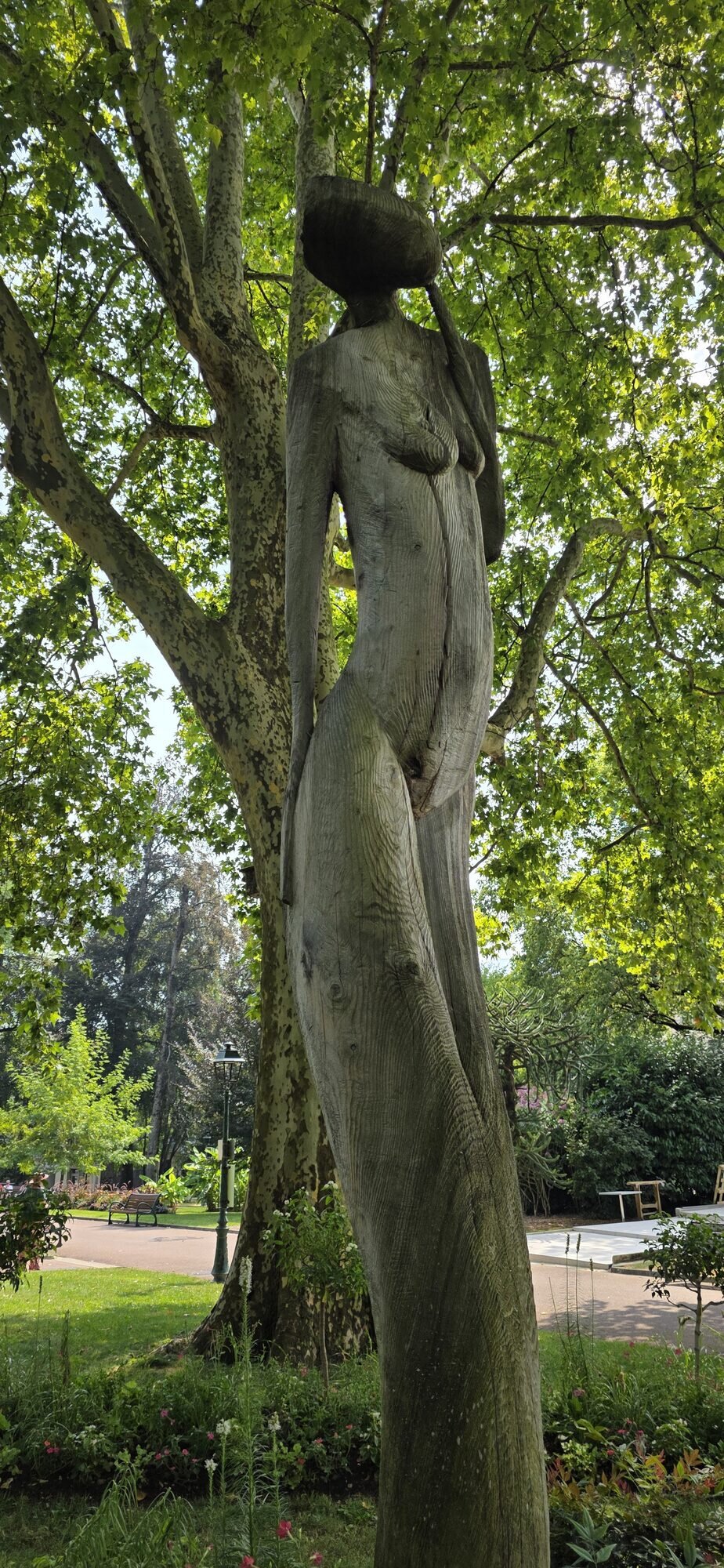
And then the public gardens handed me the best thing of the day anyway. A woman carved out of one trunk, three or four metres of her, standing under a plane tree with a bowl balanced on her head. Whoever cut her let the timber do the talking, the grain runs down her like water running down a window. She is not smooth, she is not pretty, and she is completely alive. I sat on the grass with the sketchbook for a good long while and got precisely nowhere, which is usually the sign of a good one. Last night in Savoie. Tomorrow the bags go south. More soon.
Ink drawings of koalas made by hand in Dayboro. What changed after the 2022 endangered listing, the one that sold, and what is still on the wall.

They come through the gums before a storm and the whole paddock hears them first. Four birds, one flash of red, and the hardest thing I have ever tried to put down in ink.
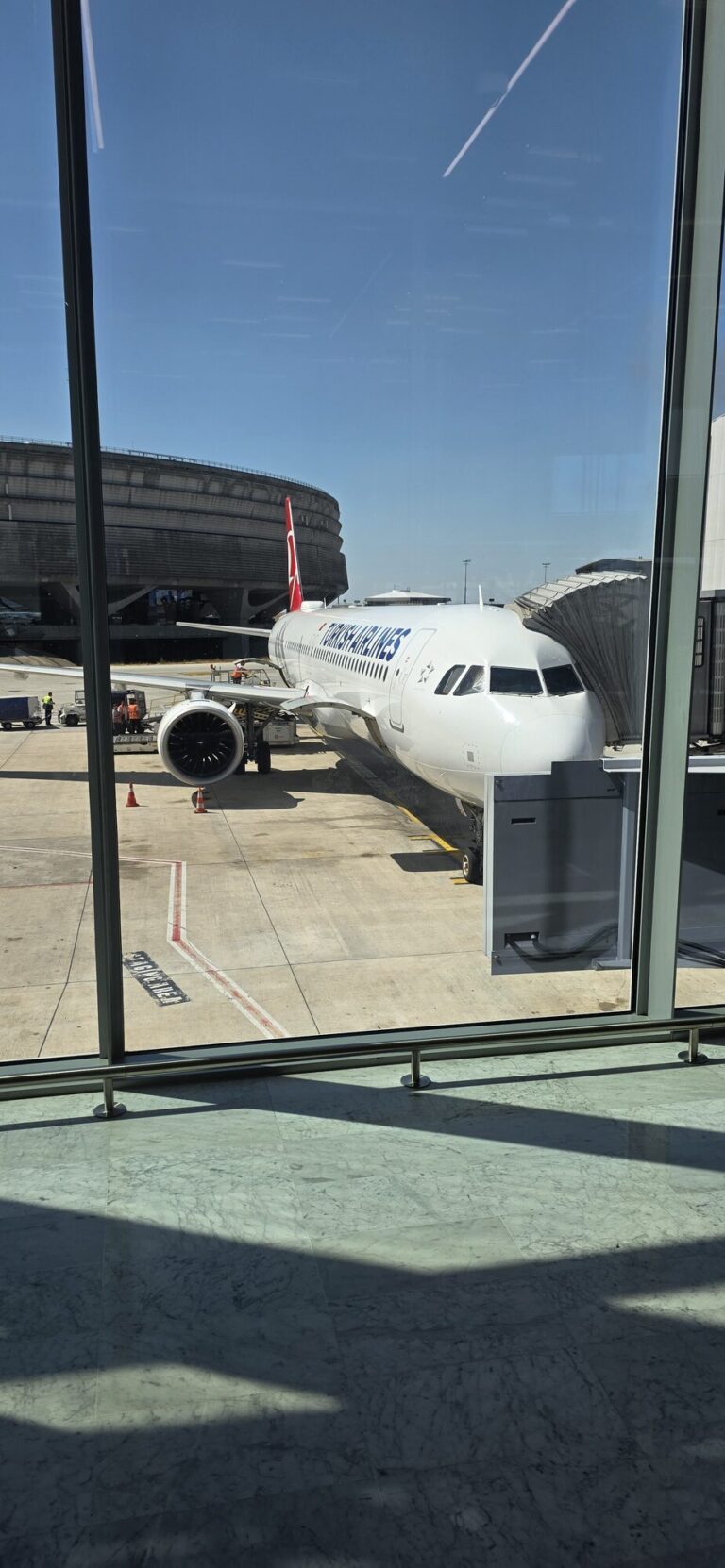
Six weeks, four countries, one full camera. The gate at Charles de Gaulle, a plane pointed at Istanbul, and the long hop home to the studio. Last post from the road.