
Drawing Koalas, Now That They Are Endangered
Ink drawings of koalas made by hand in Dayboro. What changed after the 2022 endangered listing, the one that sold, and what is still on the wall.

Yesterday I gave you the paper mill. Today, the reason the mill is there at all.
Fontaine-de-Vaucluse has one job and it does it better than anywhere in the country. At the end of the valley, under a cliff about two hundred and forty metres high, the Sorgue simply arrives. It does not trickle out of a hillside and gather itself. It comes up out of the ground already a river, twenty two cubic metres a second on an ordinary day, and up around a hundred and ten when the snow goes. Biggest spring in the country.
Mist coming off it, the noise filling the gorge, moss on every stone the water has ever touched. I stood there a long while waiting for one pattern to hold still long enough to draw, and not one of them did. Water is the only subject I know that refuses to sit. Which is why I keep going back at it. If you can draw that you can draw anything, and I cannot draw that.
Walk a few hundred metres down and it turns into something else entirely.
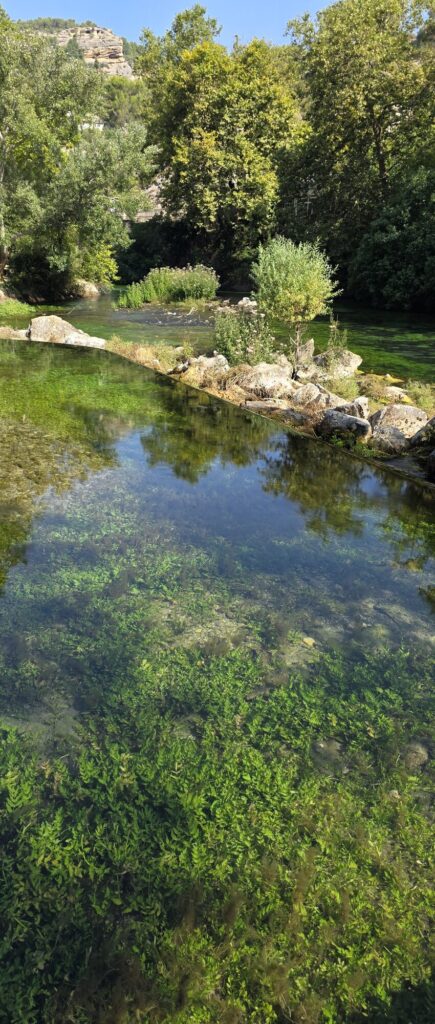
Look at the green in that. Every strand of weed lying in the same direction, and clear enough that you can count the stones underneath. It is the same river that was screaming at me round the corner. Four minutes of flat ground and it has gone from white noise to a held note.
That is the whole lesson of the day and it took me all morning to notice. Nothing about the water changed. Only what it was running over.
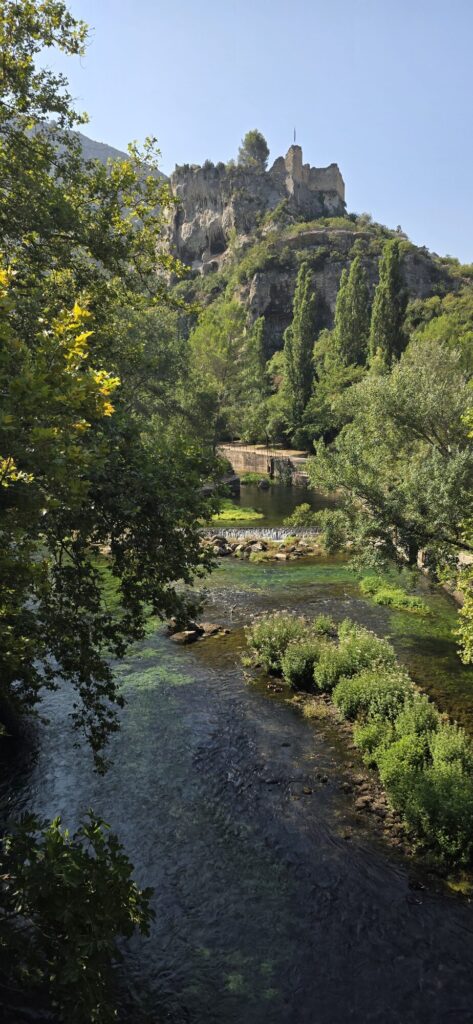
And over the top of it all, that. A ruin on a limestone crag, thirteenth century on top of something older, put up as the summer place for the bishops of Cavaillon. I climbed it. Steep, hot, worth it. From the broken top of the wall you look straight down into the gorge.
The bishop who built there was Philippe de Cabassolle, and his close friend was Petrarch, which is very likely why Petrarch came to live in this valley at all. He stayed the better part of sixteen years, until 1353, writing about a woman called Laura he had seen once in a church in Avignon in 1327 and who was married to somebody else. Sixteen years. In a gorge. At the loudest spring in France.
I have thought about that all afternoon and I have decided he had the right idea. Not the woman. The gorge. Somewhere with one enormous thing in it that you cannot solve, so you stop trying to solve it and just work in front of it every day.
I have got ten days left. I know exactly which one enormous thing I am not going to solve.
Ink drawings of koalas made by hand in Dayboro. What changed after the 2022 endangered listing, the one that sold, and what is still on the wall.

They come through the gums before a storm and the whole paddock hears them first. Four birds, one flash of red, and the hardest thing I have ever tried to put down in ink.
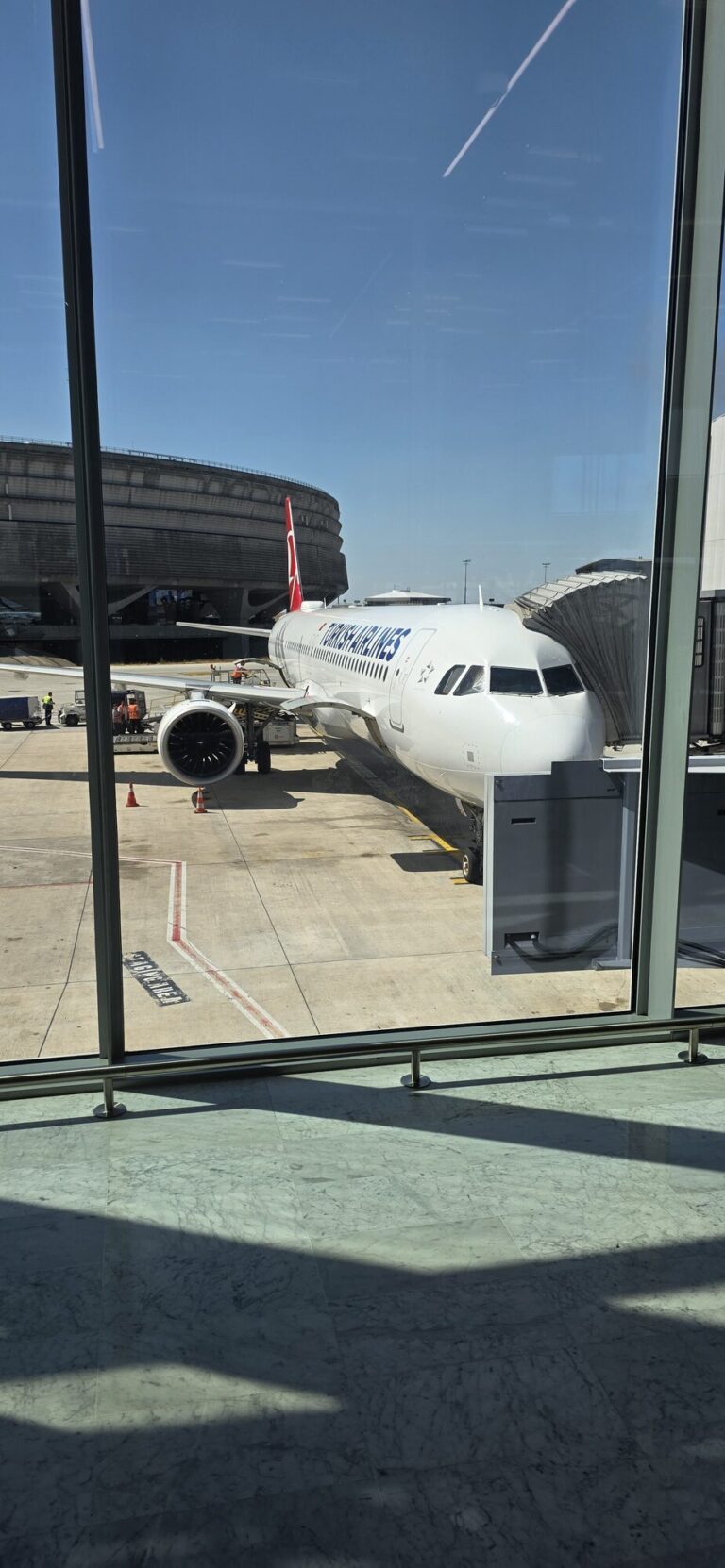
Six weeks, four countries, one full camera. The gate at Charles de Gaulle, a plane pointed at Istanbul, and the long hop home to the studio. Last post from the road.