
Drawing Koalas, Now That They Are Endangered
Ink drawings of koalas made by hand in Dayboro. What changed after the 2022 endangered listing, the one that sold, and what is still on the wall.

Second Biennale day, and for once the alarm did not have to wrestle me out of bed. Out of the flat in Mestre while the sky was still deciding what colour to be, onto the first boat across, and into a Venice that briefly belonged to nobody but the rubbish barges and the last of the night’s fishermen. Today’s job was the Arsenale, the working half of the big show across town, and I wanted the water to myself before a few thousand other visitors had the same idea.
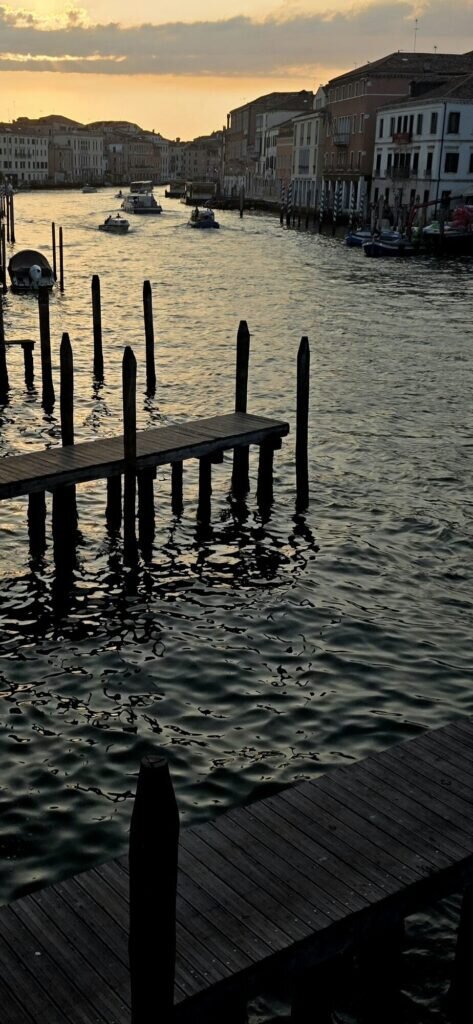
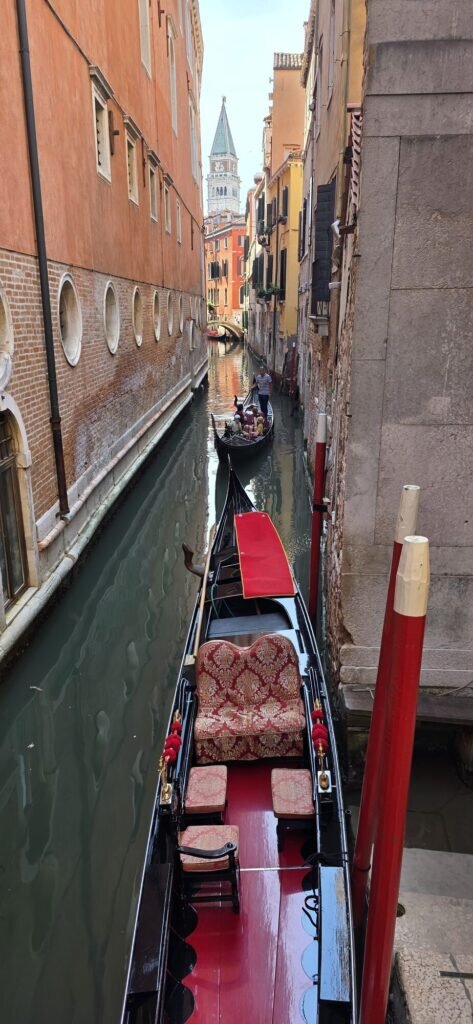
The long way round took me past Rialto while the market boats were still finding their spots and a lone gondola idled in the glow, going nowhere in particular. Venice in the cool hour before the crowds arrive is a completely different animal to the Venice everyone complains about. Quiet, faintly smug about it, and mine for about ninety minutes.
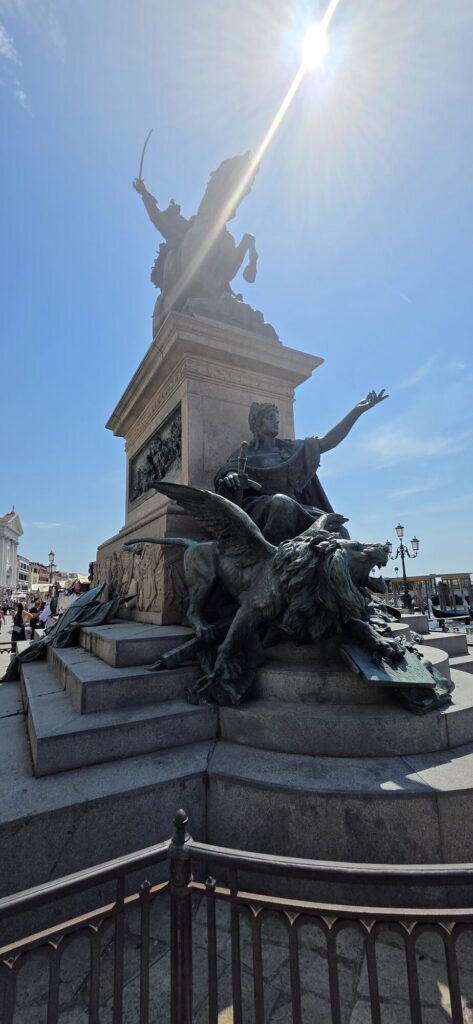
By the time I reached the Arsenale gates a bronze angel and a winged lion were keeping watch over the approach, which felt about right. This place has form for guarding things. Building started around 1104, and at its peak the Arsenale was the largest industrial complex in pre-industrial Europe, forty five hectares of it, employing up to sixteen thousand workers who could reportedly assemble a fully rigged warship in a single day from prefabricated parts. Foreigners were banned outright. Handing over a shipbuilding secret was a capital offence. Six hundred years later I walked straight in on a paper ticket with a floppy hat and a camera, and nobody executed me for looking too closely at anything. Progress, of a sort.
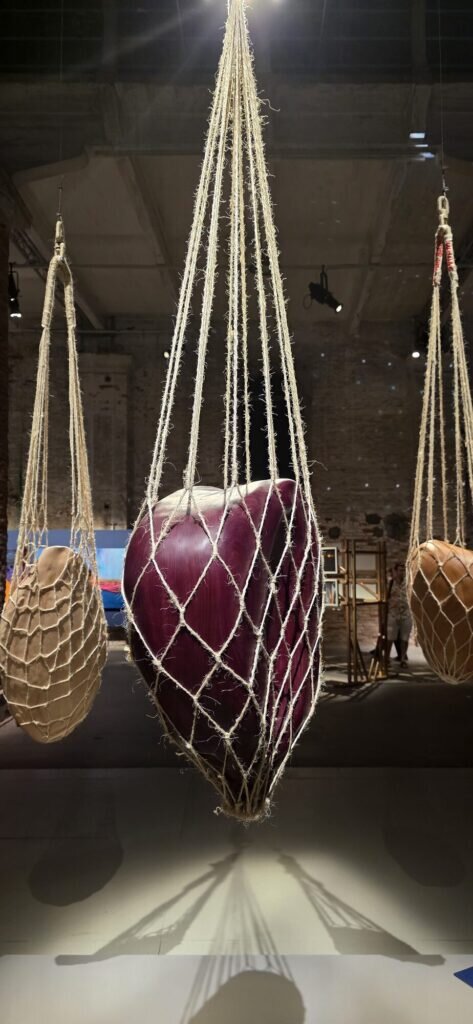
Inside, the old rope halls have swapped hemp for contemporary art and the scale still does the talking. One long gallery had a net of coarse rope cradling great globes in burgundy and gold, strung the length of the hall like something between a fishing catch and a chandelier that lost an argument with gravity. This is the whole itinerary in one image, if I am honest with myself… flow of space, scale against feeling, working out what you could remove before a piece stopped landing.
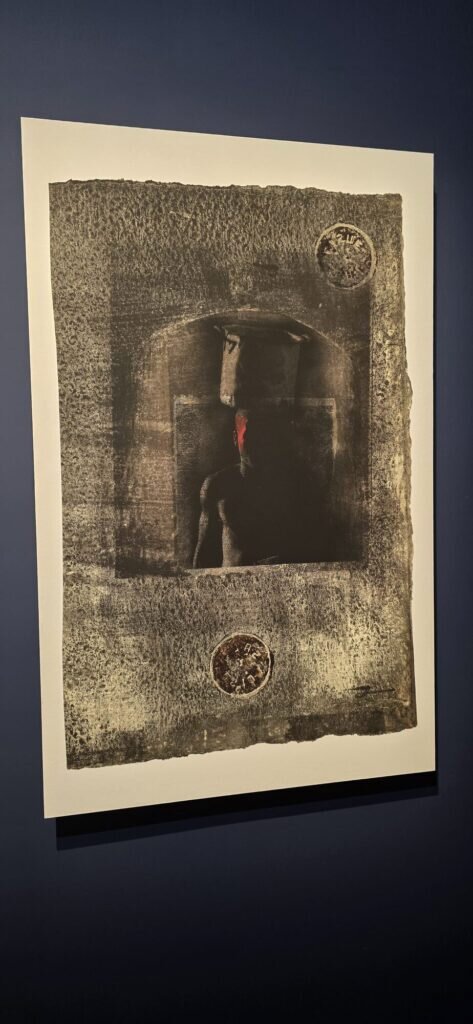
A few rooms on, a framed print stopped me properly. Dark ground, one square of red fighting its way out of the black, the kind of restraint I am terrible at and constantly chasing. I stood in front of it longer than is socially normal for a weekday morning and had a proper think about my own inking hand.
The piece that actually made me put the phone in my pocket and just watch was a hanging sculpture of warped gold ribbons, twisting the length of an old brick corridor like a chandelier learning to swim. A visitor walked underneath it for scale and suddenly the whole thing had a size I could feel before my brain caught up and started analysing it. I filmed twelve seconds and deleted six other attempts because none of them held still long enough to be honest.
The last stretch of the hall had a scroll of dense black ink pinned floor to ceiling, more handwriting than drawing, more drawing than handwriting, the kind of mark making I think about at two in the morning at home and never quite manage myself. Not mine, whoever made it, but I stood there wanting it to be. By early afternoon the crowds had properly arrived and the light outside had gone hard and white, so I let the Arsenale keep the rest of its secrets and went to find lunch. Tomorrow, the other half of the show. More soon.
Ink drawings of koalas made by hand in Dayboro. What changed after the 2022 endangered listing, the one that sold, and what is still on the wall.

They come through the gums before a storm and the whole paddock hears them first. Four birds, one flash of red, and the hardest thing I have ever tried to put down in ink.
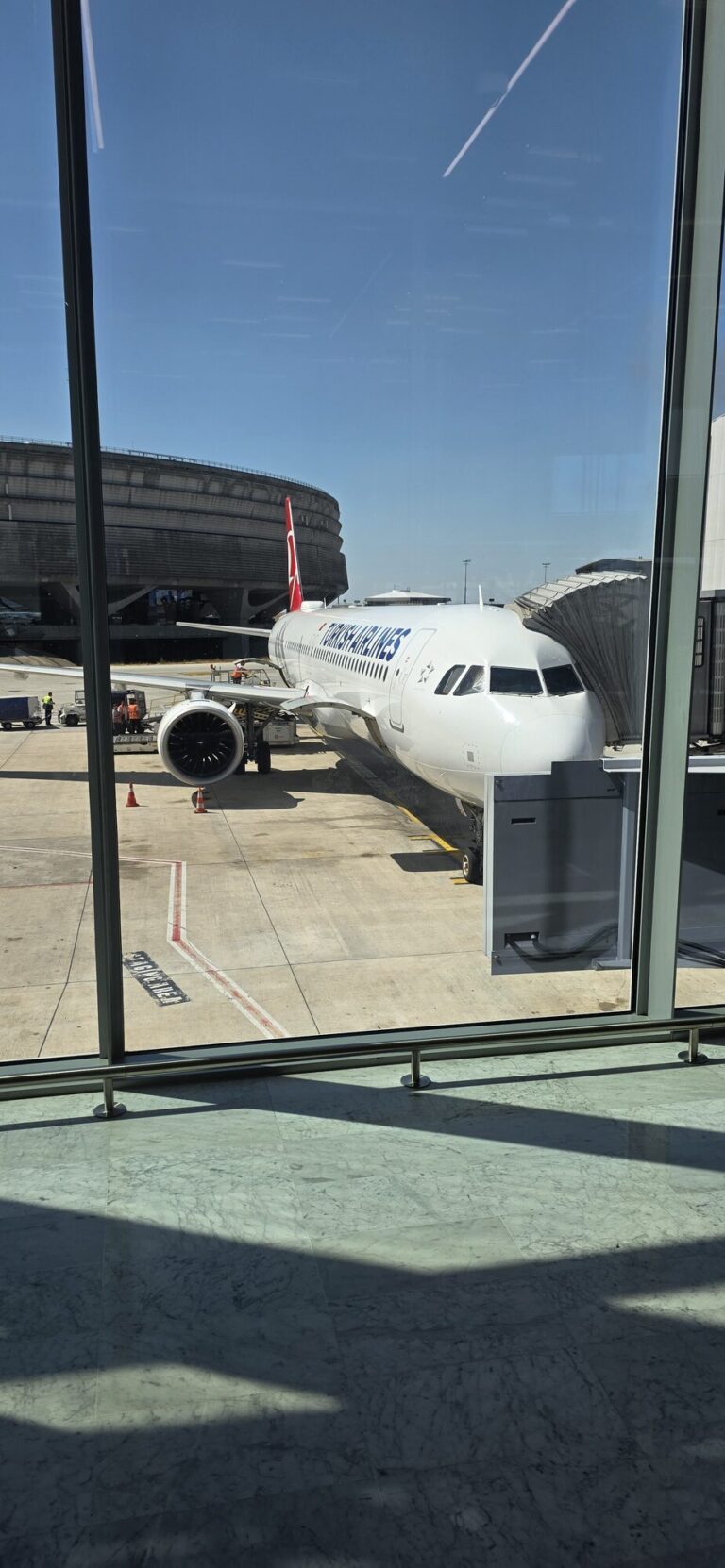
Six weeks, four countries, one full camera. The gate at Charles de Gaulle, a plane pointed at Istanbul, and the long hop home to the studio. Last post from the road.