
Drawing Koalas, Now That They Are Endangered
Ink drawings of koalas made by hand in Dayboro. What changed after the 2022 endangered listing, the one that sold, and what is still on the wall.

Yesterday was the shipyard. Today was the gardens, the other half of the Biennale, and a completely different kind of looking. Fewer echoing industrial halls, more clipped hedges and small national pavilions elbowing each other for attention, each one a tiny embassy built just to show off its country’s artists. I went in with the same brief I have been carrying all week… movement without an obvious subject, and what happens to scale once you take the subject away entirely.
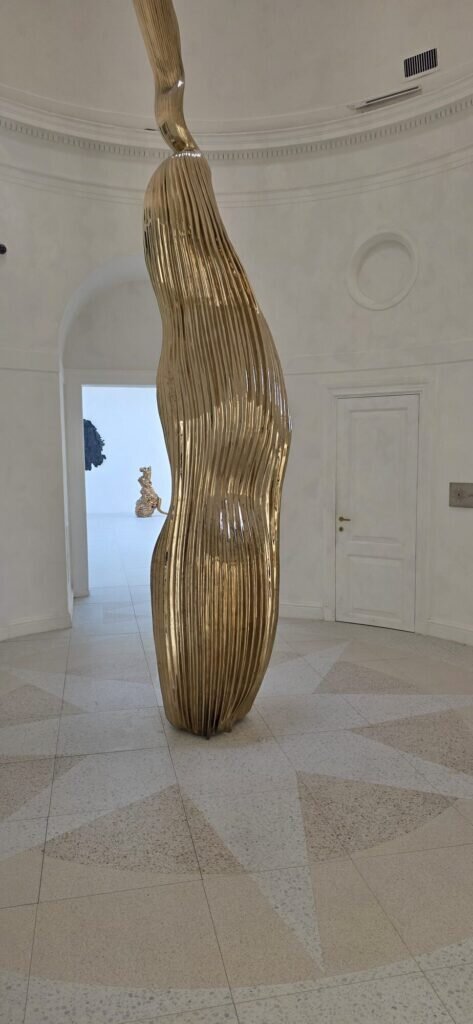
First pavilion in and a length of polished gold, folded like a ribbon left in the sun too long, took up an entire white room and gave nothing away about what it was actually meant to be. That is rather the point, I think. Nobody in there was reading a placard. Everybody was just standing, looking, working it out with their eyes instead of their reading glasses.
One national pavilion had gone fully dark and turned itself into something between a chapel and a dream. A grand piano sat untouched under a ceiling rippling like the underside of a swimming pool, projected text drifting across the walls in a language I could not read fast enough to catch. No subject in the frame at all, and somehow the most movement I saw all day.
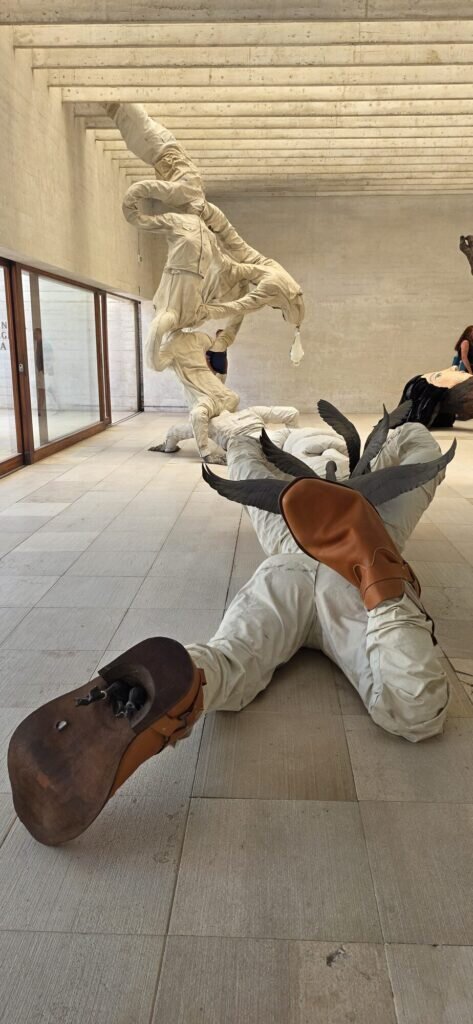
Out in a colonnade, a huddle of life size figures made of stiff pale canvas and real feathers stood around like a crew waiting for a delayed flight, wings tucked, boots scuffed at the heel. No faces to speak of. All the personality was in the posture. I have spent this whole trip chasing gesture over likeness and here it was done better than I have managed in a month of trying.
The Giardini itself has its own history worth knowing before you write the pavilions off as garden follies. Napoleon had the whole area drained and laid out in 1807, a proper piece of imperial urban planning by the architect Giannantonio Selva. The first exhibition opened here in 1895 and pulled two hundred thousand visitors in its first year, three hundred thousand a few years later, numbers that talked the city into building permanent national pavilions from 1907 onward. Belgium built first. Britain followed in 1909, a stately neoclassical box the British Council has run since 1937. A hundred and thirty years on, the same patch of garden is still the closest thing the art world has to an Olympic village, minus the sport and plus rather a lot of wine at the openings.
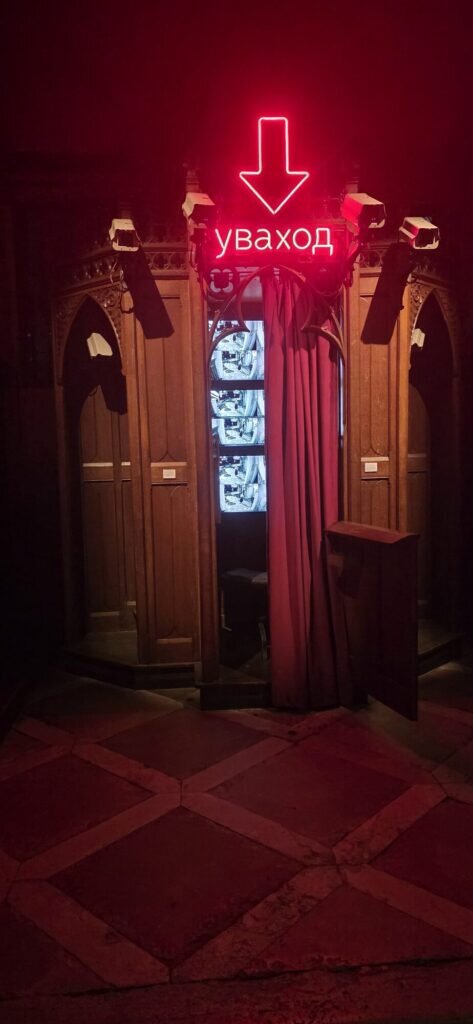
One exhibit had gone full theatre on me, a small dark room dressed in red with glowing signage over what looked like a church’s worth of borrowed pews, a trio of tiny screens flickering at the far end. I have no idea what the piece was actually called. I stood in the doorway for a full minute just enjoying being unsettled on purpose, which does not happen to me nearly enough at home.
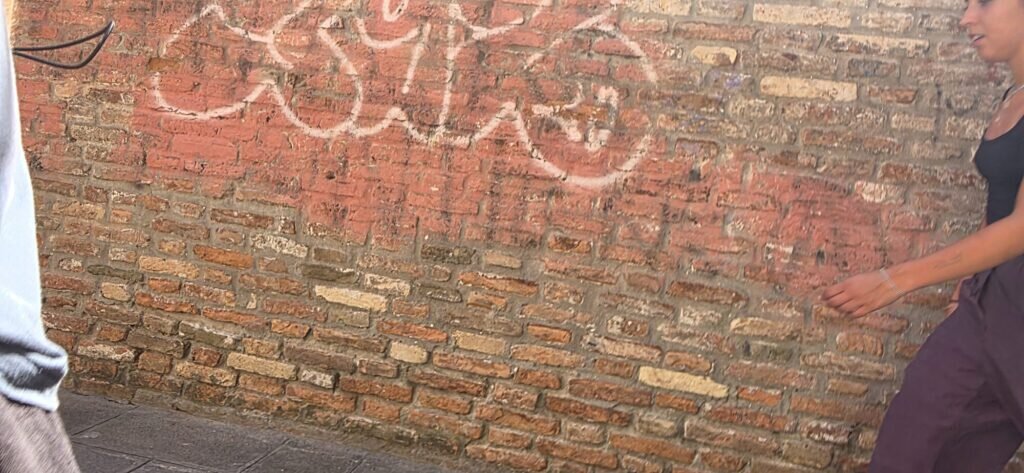
By late afternoon my feet had had enough opinions for one day and I trailed a hand along a brick wall on the way out, past somebody’s chalk hearts scratched into the mortar years ago and never washed off. Two Biennale days down, and I still have not opened the sketchbook once. That is not a complaint. Some weeks the job is looking, not drawing, and the tank is filling up nicely. More soon.
Ink drawings of koalas made by hand in Dayboro. What changed after the 2022 endangered listing, the one that sold, and what is still on the wall.

They come through the gums before a storm and the whole paddock hears them first. Four birds, one flash of red, and the hardest thing I have ever tried to put down in ink.
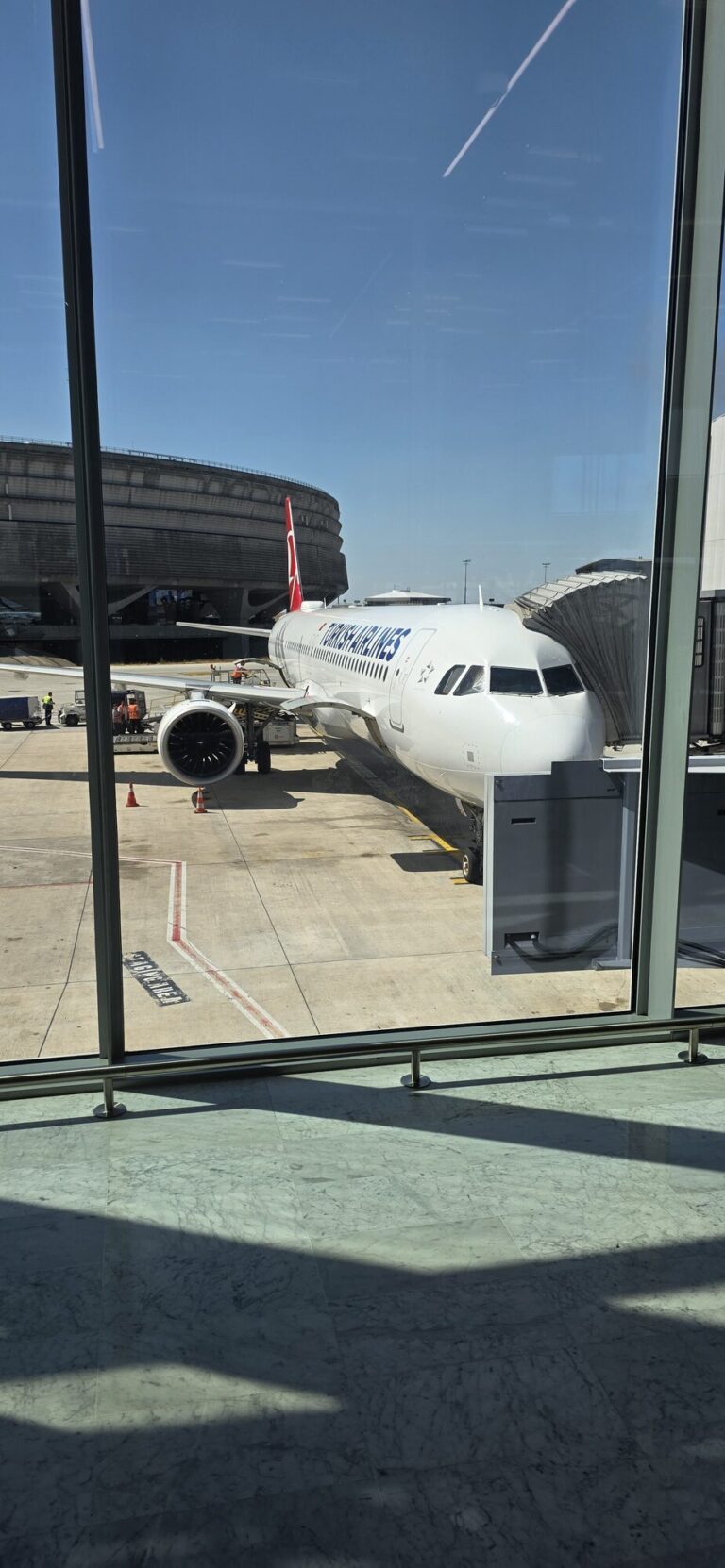
Six weeks, four countries, one full camera. The gate at Charles de Gaulle, a plane pointed at Istanbul, and the long hop home to the studio. Last post from the road.