
Drawing Koalas, Now That They Are Endangered
Ink drawings of koalas made by hand in Dayboro. What changed after the 2022 endangered listing, the one that sold, and what is still on the wall.

Everything in this town is for sale. Eight days here and I have started pricing things in my head without meaning to. Then I went into the church.
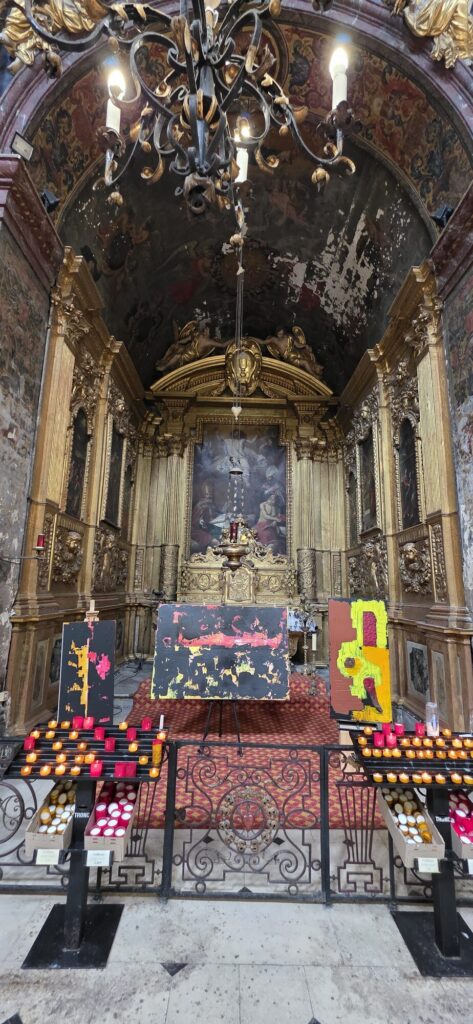
Look at what somebody has done there. A chapel dripping in gold leaf, a painted ceiling going black with age, an old canvas in the middle of it all, and standing in front of the lot on plain easels, three modern abstracts. Red, black, a bit of yellow. Scraped and dragged, no picture in them at all.
No label. No artist’s name I could find anywhere, no sign at the door, nothing telling you it was an exhibition. Just three paintings put down in front of an altar the way you would lean a canvas against the wall of your own studio.
And it works, which is the annoying part. All that gold is doing one thing, which is glittering, and it needs something flat and dumb and modern in front of it to be seen properly at all.
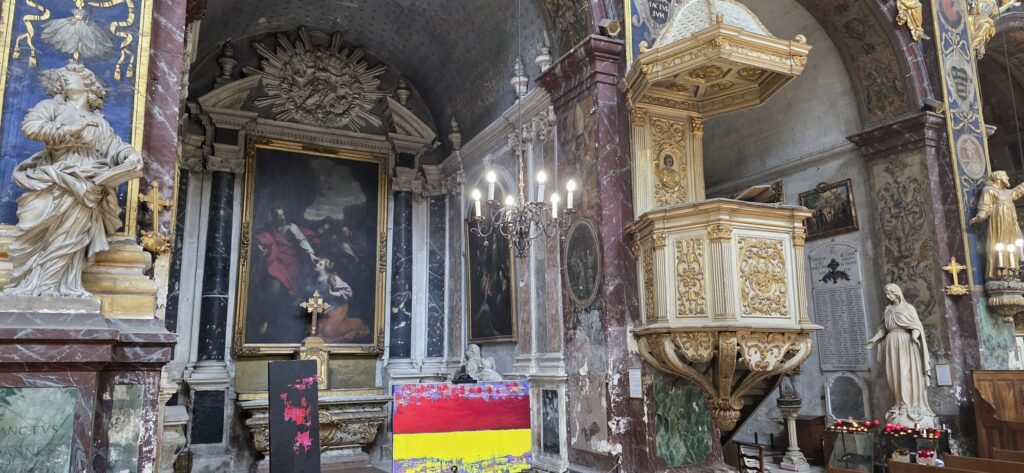
Wider along, the same trick again. A gilded pulpit up on its stem, marble the colour of raw meat, white saints standing in their niches, one big dark canvas in a gold frame. And on the floor beside it, red and yellow, wet looking, propped against the step like it got delivered and nobody had time.
The building was rebuilt from 1647 and finished around 1668, and they consecrated it in 1672. Italian hands all over the design. They kept adding to it for another hundred years, and when the convents were shut down in 1791 a fair bit of what was in them ended up in here. So the whole interior is already a collection of other people’s things, gathered up and rearranged. Somebody sticking three abstracts in the middle of it is just carrying on.
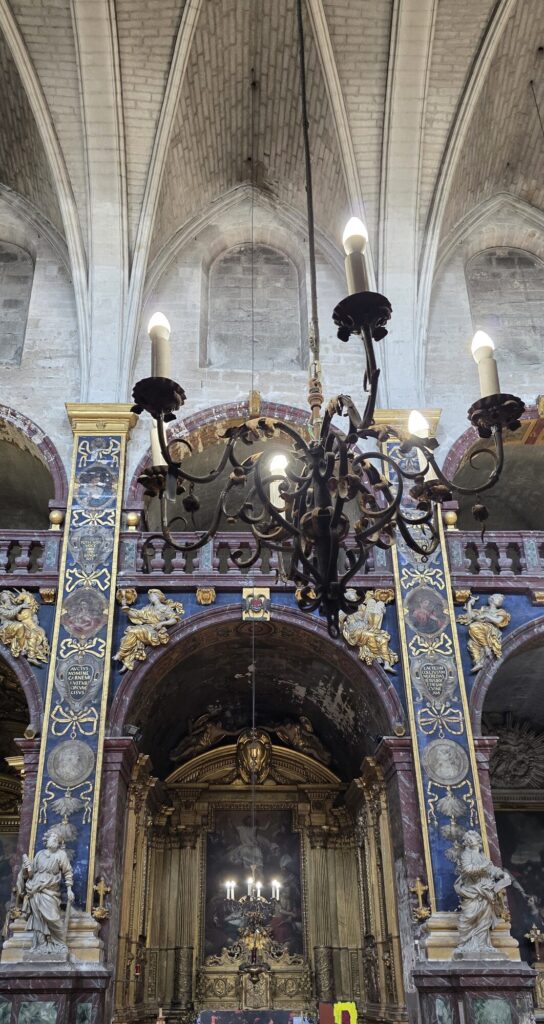
Then look straight up and you get the best thing in the building for nothing. Bare Gothic vaulting, grey, ribbed, completely undecorated. And then a hard line, and below it the seventeenth century loses its mind. Deep blue, gold bows, gilded angels shoving their way out of the cornice, medallions, saints.
Two buildings on top of each other, and the join is a straight horizontal line about ten metres up. Nobody tried to blend them. They just stopped one thing and started another.
They say the big retable in the choir carries two hundred and twenty two angels. I did not count them. I stood under that line instead, working out how you would ever get away with that much restraint at the top and that much noise at the bottom in one drawing.
Answer is you would not. You would soften the join, because you would be frightened. They were not.
Out the door and back into a street where a rusted garden chair costs ninety euros.
Ink drawings of koalas made by hand in Dayboro. What changed after the 2022 endangered listing, the one that sold, and what is still on the wall.

They come through the gums before a storm and the whole paddock hears them first. Four birds, one flash of red, and the hardest thing I have ever tried to put down in ink.
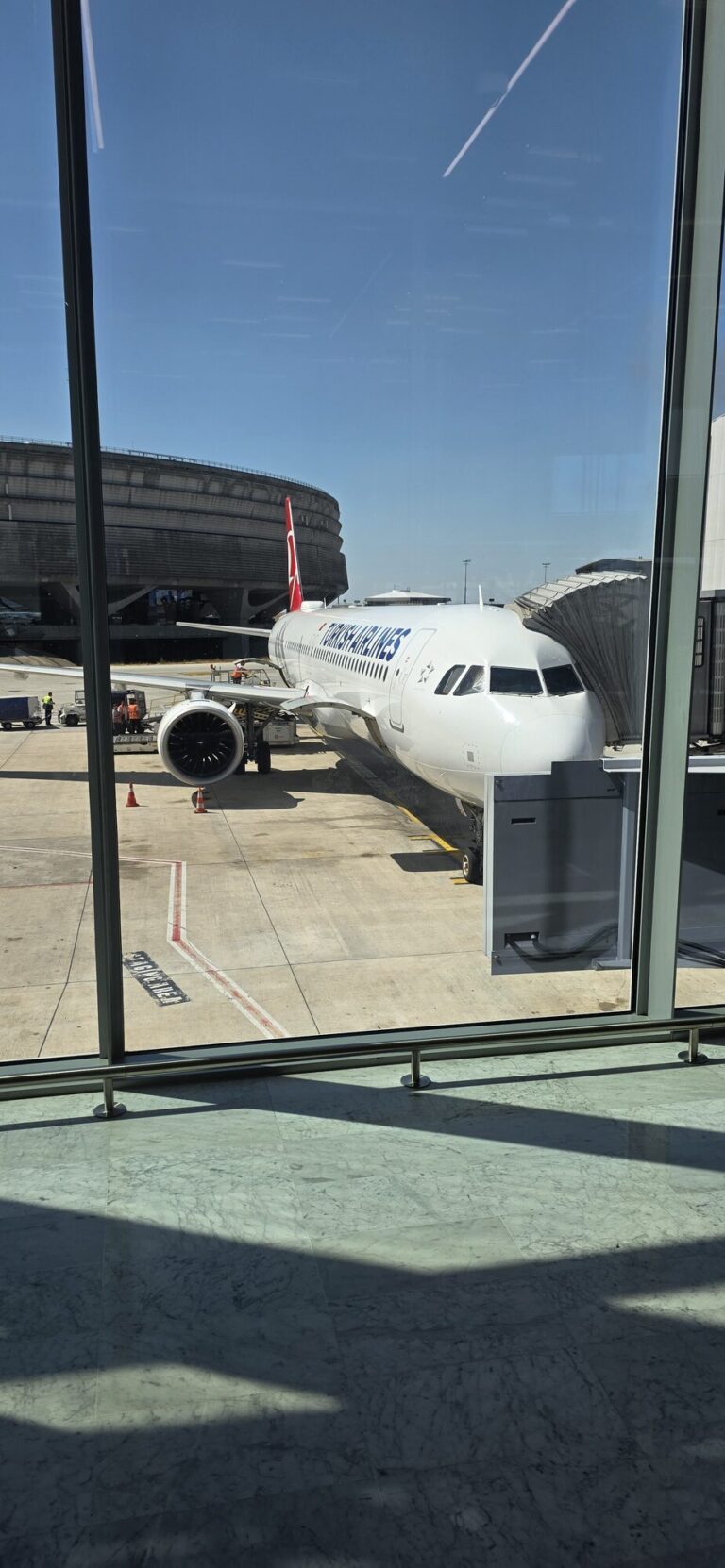
Six weeks, four countries, one full camera. The gate at Charles de Gaulle, a plane pointed at Istanbul, and the long hop home to the studio. Last post from the road.